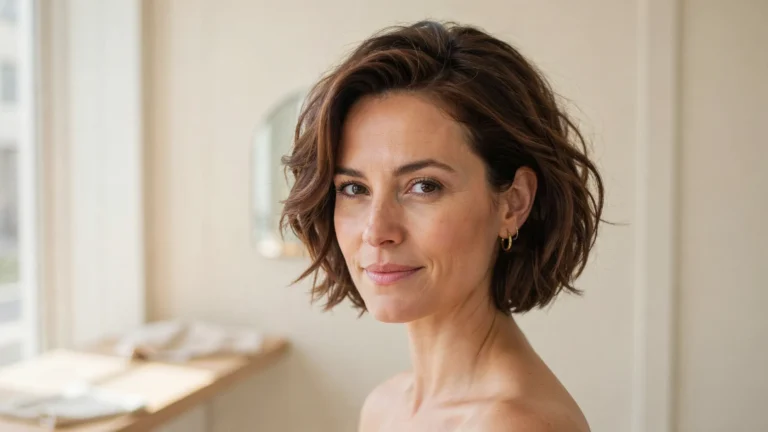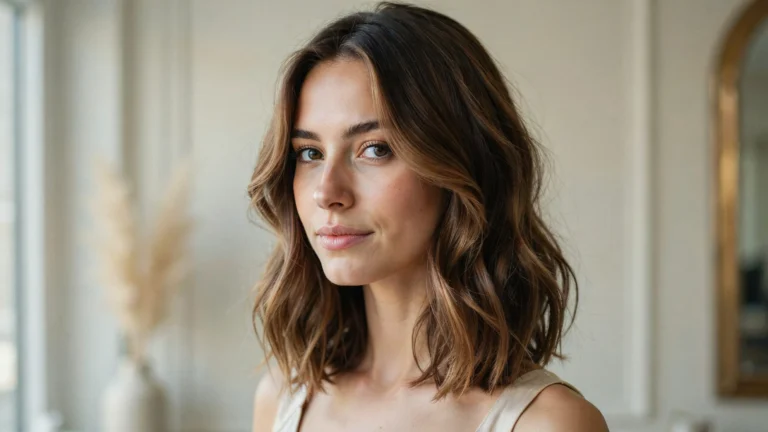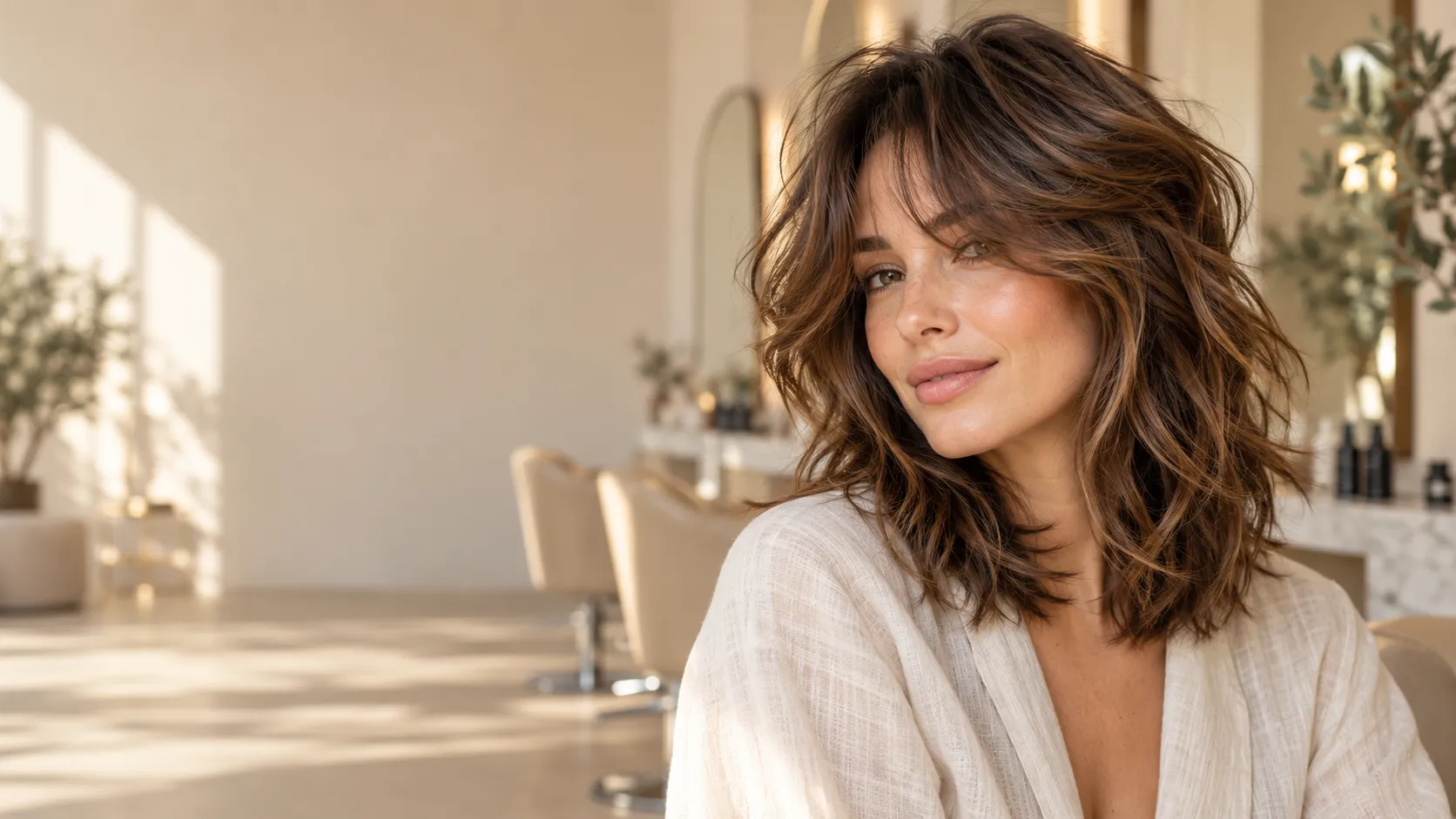
The best hairstyles don’t have to look perfectly polished to turn heads. Sometimes, a little messiness is exactly what makes a haircut feel fresh, modern, and full of personality.
Shag Haircuts bring together choppy layers, feathered ends, and soft bangs to create that relaxed, undone finish so many people love. Whether your hair is short, shoulder-length, long, straight, wavy, or naturally curly, the right layered shape can add movement and bring out your hair’s natural texture.
If your current hairstyle feels flat, heavy, or difficult to style, these ideas will help you explore a more effortless look. From wispy curtain bangs to voluminous curls and tousled brunette layers, you’ll discover options for different lengths, textures, and personal styles. I’ve noticed that the most wearable cuts often work with your natural hair rather than fighting against it. Save your favorite photos, consider your everyday routine, and use these 25 inspiring looks to find a style that feels genuinely yours.
1. Feathered Curtain Bangs
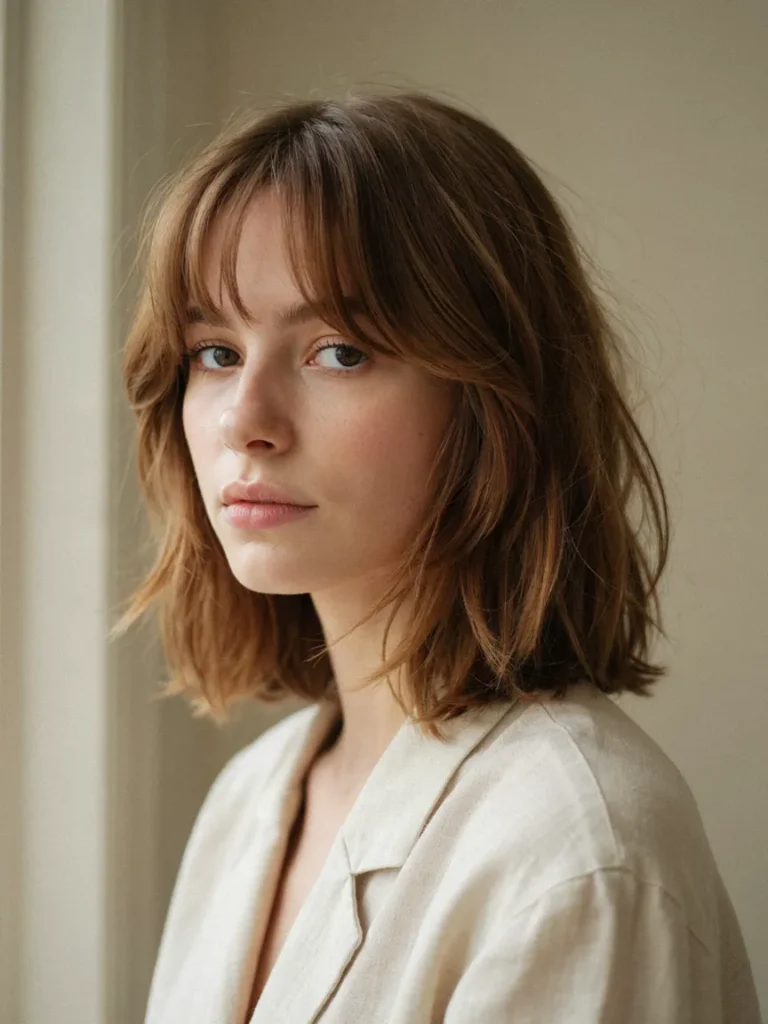
Feathered curtain bangs bring instant softness to a layered haircut without making it feel overly styled. The center part opens around the forehead, while wispy pieces blend into cheekbone-length layers for a relaxed, face-framing effect.
The secret is keeping the fringe light rather than cutting it into a thick, blunt line. Ask your stylist for shorter pieces around the eyes that gradually lengthen toward the temples. The result is movement, texture, and that slightly undone finish that makes shag haircuts so appealing. A small round brush can shape the fringe, but air-drying often creates an even more natural appearance.
2. Tousled Shoulder Layers
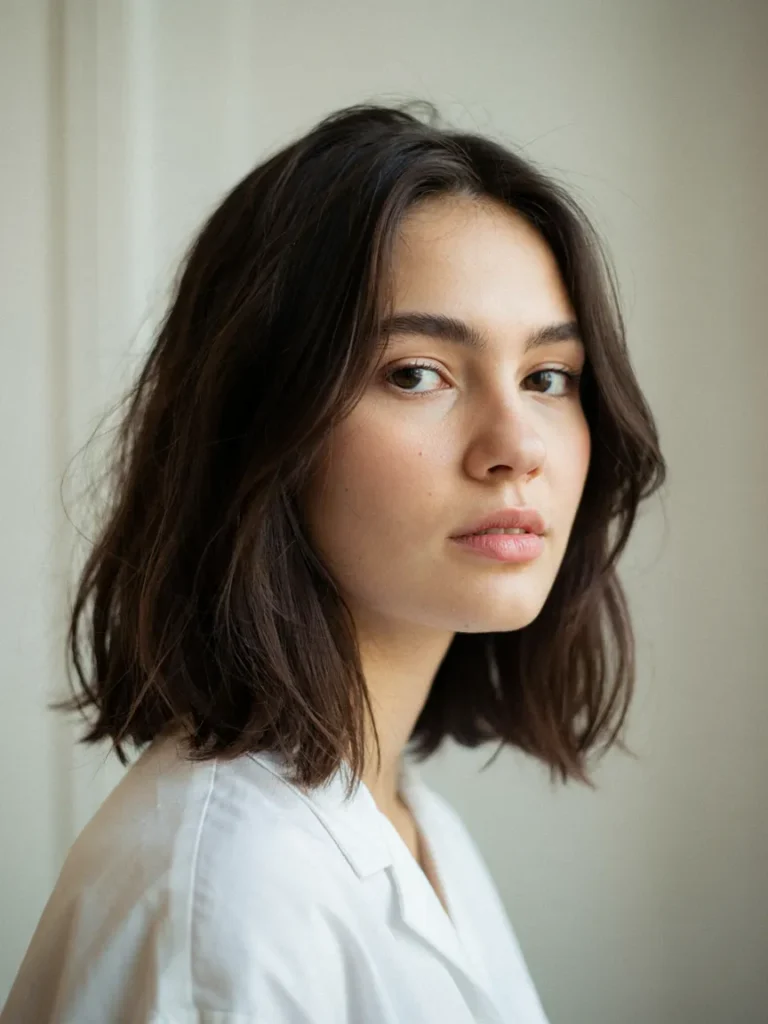
- Length: Keep the overall cut around the shoulders for a versatile, easy-to-manage shape.
- Layers: Request shorter crown layers and longer, wispy pieces through the sides.
- Texture: Use a lightweight texturizing spray to separate the ends without making them stiff.
- Styling: Scrunch damp hair with your hands, then let it air-dry or use a diffuser on low heat.
- Maintenance: Schedule trims when the ends lose their shape or the layers begin to feel heavy.
Shoulder-length layers offer a useful middle ground between a short, edgy cut and longer hair that needs extra styling. The varying lengths create natural separation, so the finished look feels relaxed rather than carefully arranged. For finer hair, ask your stylist to preserve enough fullness at the ends instead of removing too much weight.
3. Wispy Copper Shag
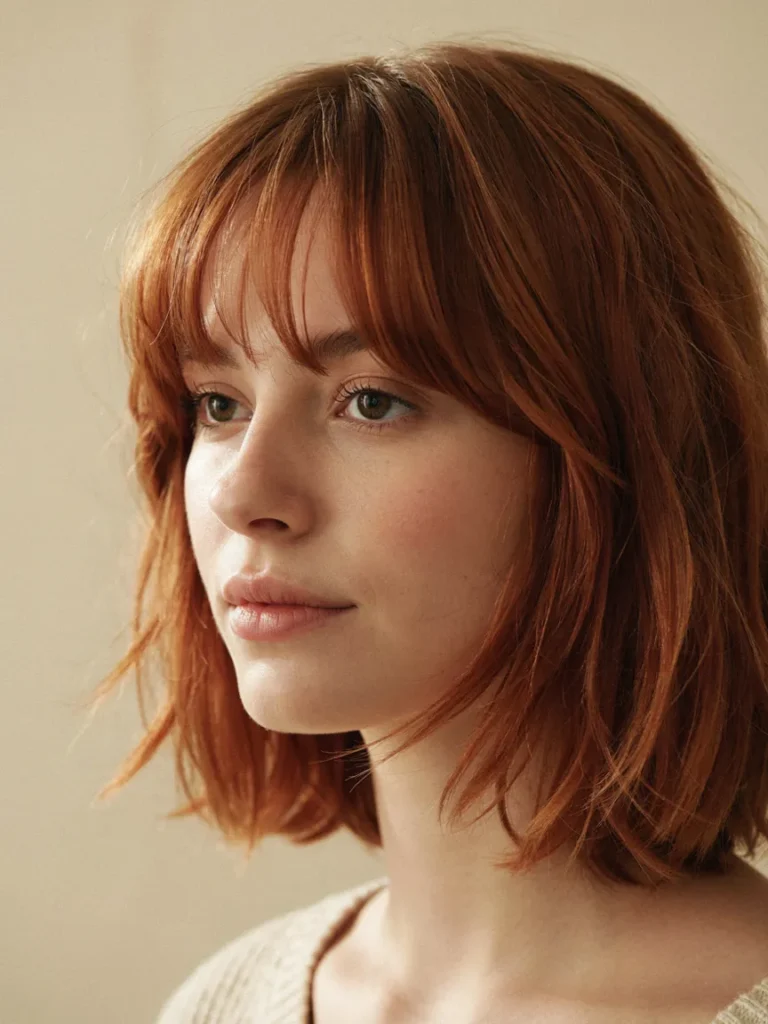
Quick Tip:
Ask for copper shades that complement your natural coloring, then choose a lightweight styling cream to define the layers without flattening them. Copper tones can fade with frequent washing, so use color-safe shampoo and cooler water to help preserve their vibrancy.
A wispy copper shag combines warm color with an airy, textured silhouette. The shorter fringe draws attention toward the eyes, while uneven layers keep the overall shape from looking too polished. In my experience, this combination works especially well when the color has subtle tonal variation rather than one flat, intense shade. Bring reference photos showing both the haircut and the copper tone you prefer, since lighting can make red shades look very different.
4. Choppy Chin-Length Layers
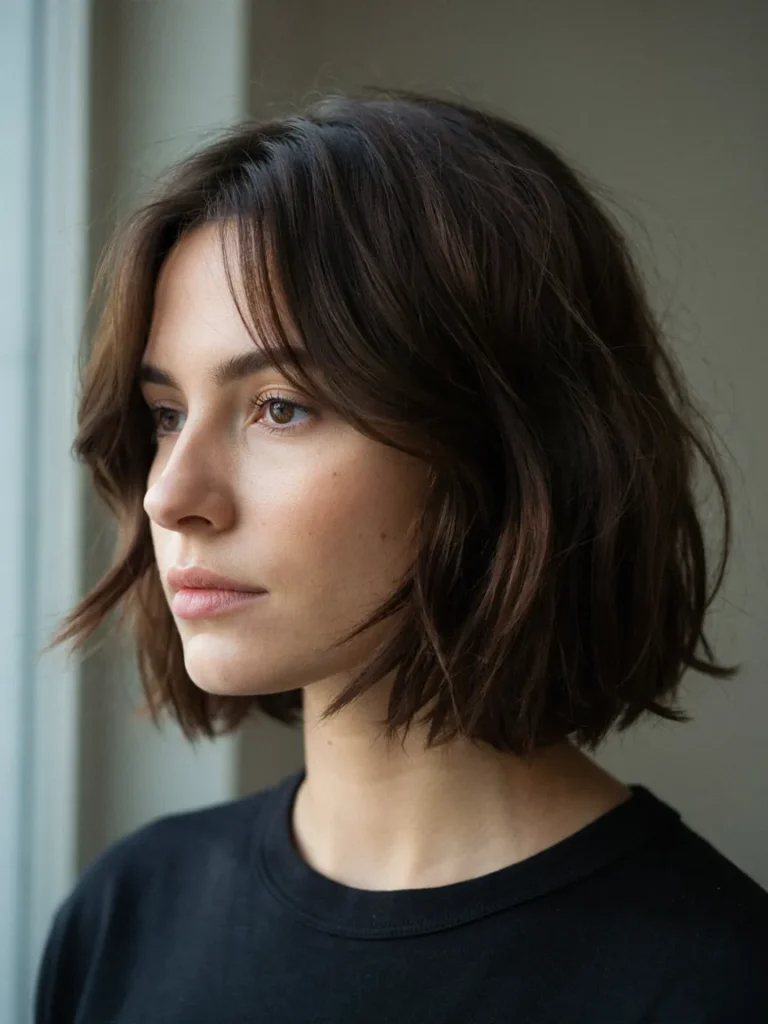
BEFORE: A chin-length bob with blunt edges can look heavy around the jaw, especially when the hair naturally falls straight. The shape may lack movement without daily styling.
AFTER: Choppy layers create separation around the cheeks and jawline. The ends look lighter, and the haircut gains a relaxed, slightly rebellious finish.
The key is keeping the layers connected rather than cutting too many disconnected pieces. Ask your stylist to customize the amount of texture for your hair density. This shorter shag works especially well for anyone who enjoys a defined shape with minimal styling. A dab of lightweight styling paste helps emphasize individual pieces without making the hair look greasy.
5. Long Shag With Fringe

- Preserve the length. Ask for long layers that maintain fullness through the bottom while removing excess weight around the crown.
- Shape the fringe. Choose eyebrow-skimming bangs or a longer fringe that blends into the sides.
- Build natural texture. Apply a small amount of mousse to damp hair, concentrating on the roots and mid-lengths.
- Finish loosely. Use a diffuser or allow the hair to air-dry, then separate a few pieces with your fingers.
Long, layered hair can feel much more dynamic when the shape includes movement around the face. The fringe adds definition, while the longer layers prevent the overall cut from appearing flat or overly uniform. For thick hair, ask about removing internal bulk without thinning the ends excessively. This helps preserve a fuller outline while creating that easy, undone finish.
6. Soft Shag Versus Wolf Cut
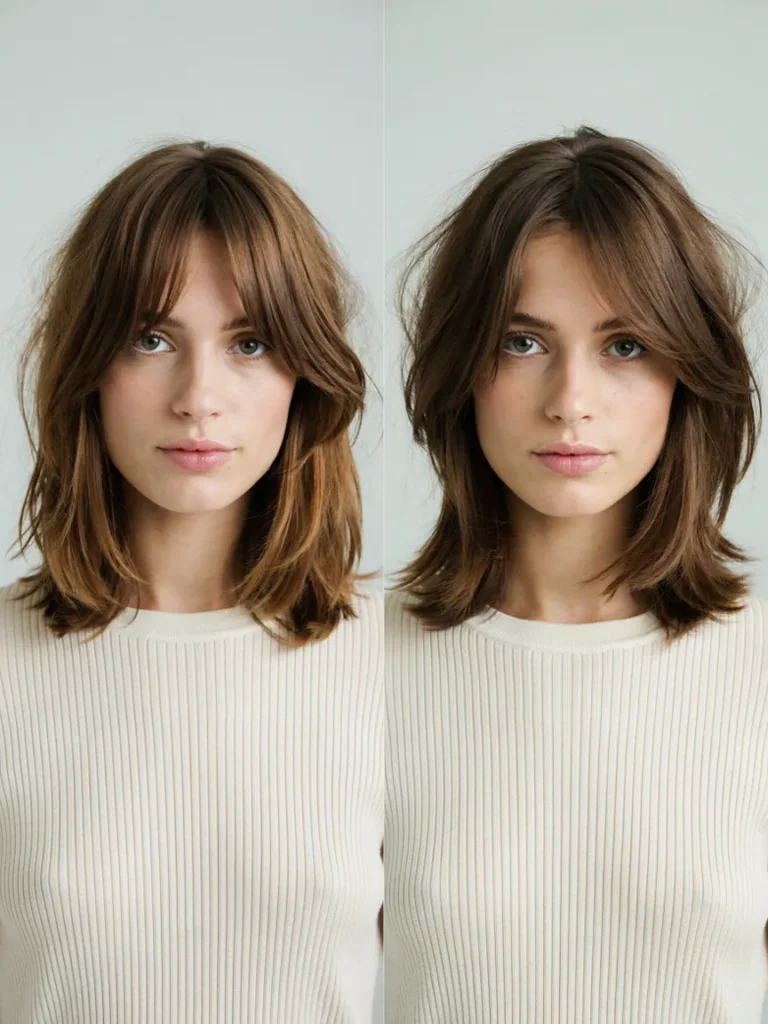
| Feature | Soft Shag | Wolf Cut |
| Layering | Blended, feathered layers | Shorter, more dramatic crown layers |
| Overall shape | Soft and balanced | Shaggy with a stronger mullet influence |
| Volume | Distributed throughout | Concentrated around the crown |
| Fringe | Wispy or curtain bangs | Often fuller, choppier bangs |
| Styling | Loose, natural movement | More defined texture and separation |
Both cuts create movement, but the softer version offers a more blended finish, while the wolf cut makes a bolder statement. When choosing between them, consider how much contrast you want between the crown and the ends. Bring photos of your preferred silhouette to your stylist, especially if your hair is very straight, fine, or naturally curly.
7. Curly Shag With Bangs
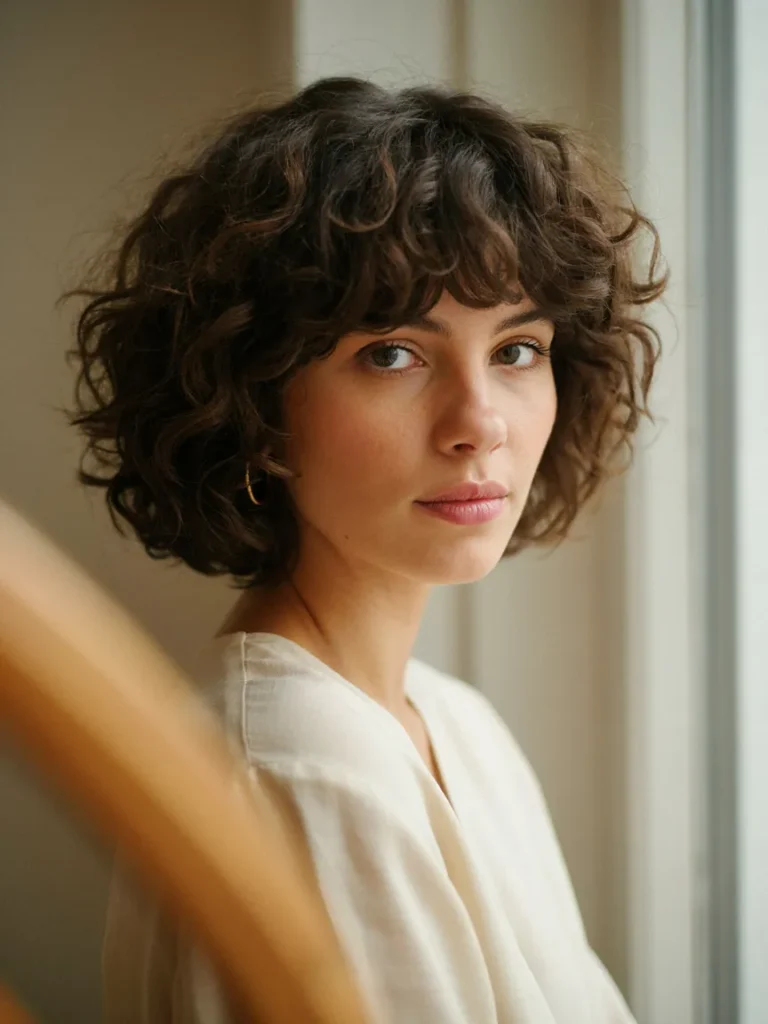
DO:
- Ask for layers shaped around your natural curl pattern.
- Request a dry or curl-aware consultation if your stylist specializes in textured hair.
- Apply leave-in conditioner to damp curls for definition and moisture.
- Diffuse on low heat or allow curls to air-dry without touching them excessively.
DON’T:
- Cut the fringe too short without accounting for curl shrinkage.
- Brush dry curls if you want to preserve their natural definition.
- Apply heavy products that weigh down the crown.
- Expect every curl to fall into an identical shape.
Curly shag haircuts work by distributing volume throughout the head instead of allowing curls to form one heavy triangle. The right layers help curls spring independently, while a shaped fringe brings attention to the eyes. Since curls can change length dramatically as they dry, discuss your preferred finished shape before the scissors come out.
8. Wispy Blonde Shag
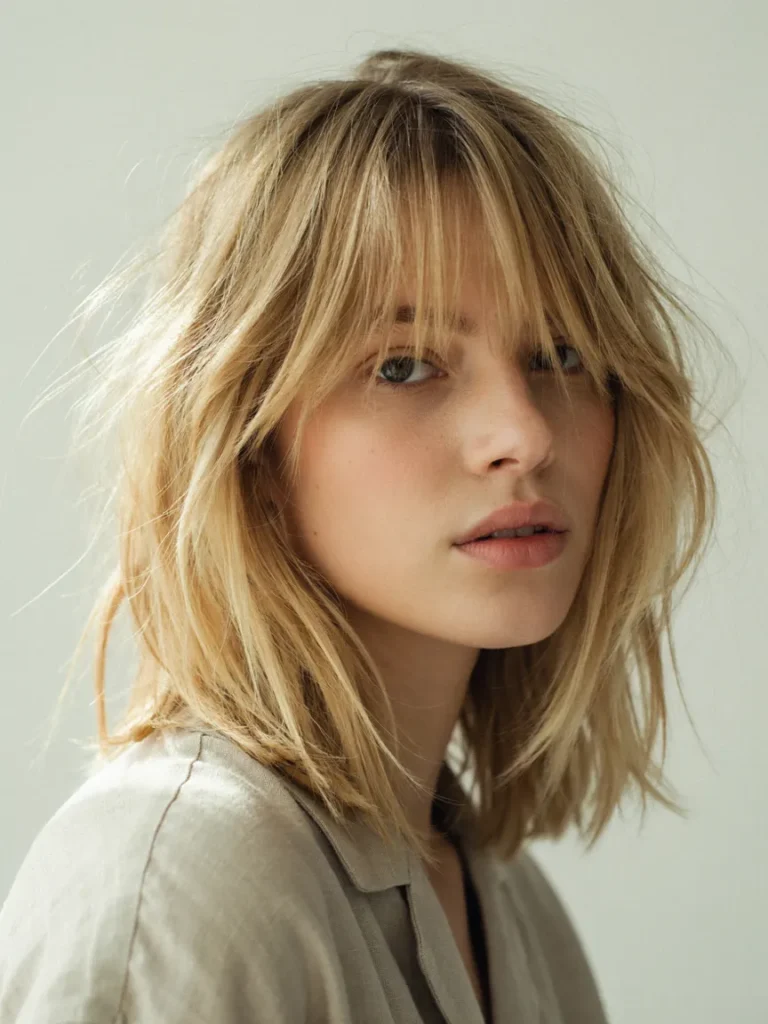
Length: Medium, around the shoulders
Color: Honey blonde, beige blonde, or soft golden highlights
Styling Time: Approximately 5 to 10 minutes once familiar with the routine
Best For: People who enjoy light, separated layers and a soft fringe
Maintenance: Root touch-ups depend on the coloring technique and natural regrowth
Blonde tones can make individual layers easier to see, especially when subtle highlights create dimension between shorter and longer pieces. A wispy fringe keeps the style from feeling too structured. For less upkeep, consider a darker root blend rather than an all-over blonde color. Use a heat protectant before styling and a lightweight product to keep the ends defined without creating stiffness.
9. Textured Black Shag
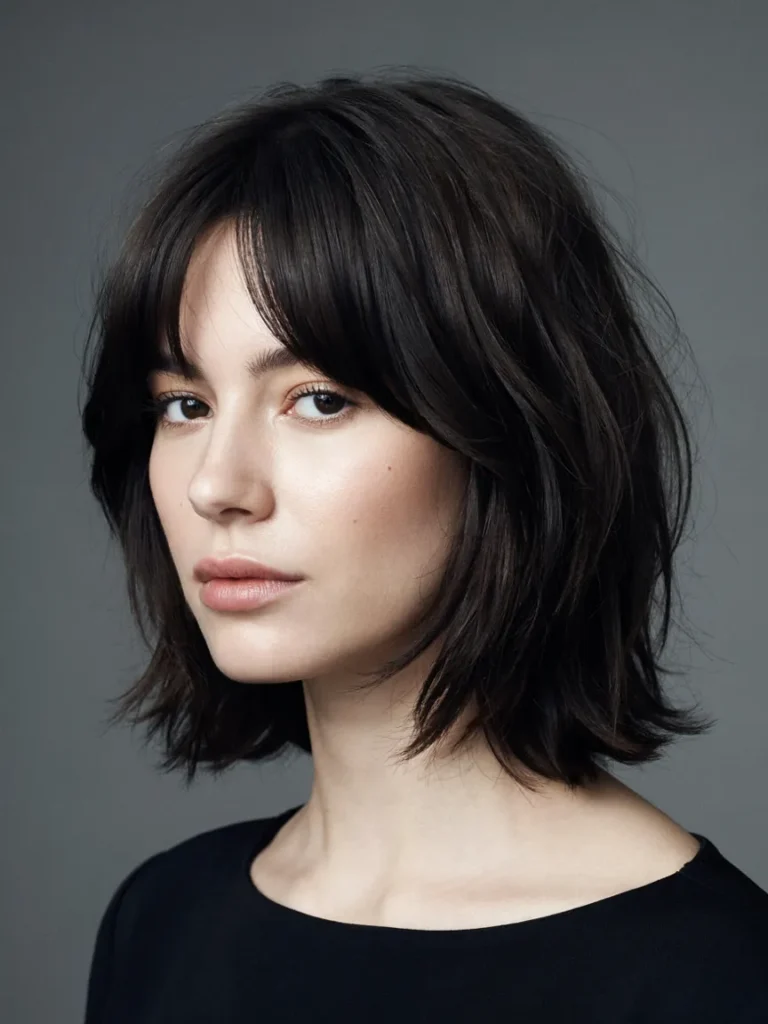
A deep black shade gives choppy layers a striking outline while allowing the haircut’s shape to remain the main attraction. The secret is creating visible movement without sacrificing the hair’s natural shine.
For a softer finish, ask your stylist to blend the shorter crown pieces into the sides and keep the ends lightly feathered. A pea-sized amount of smoothing cream can control flyaways, while a small dab of texturizing paste helps separate the tips. Avoid applying too much product near the roots, where it can flatten the volume. This style suits anyone who wants a dark, polished color paired with a relaxed silhouette.
10. Shaggy Pixie Bob
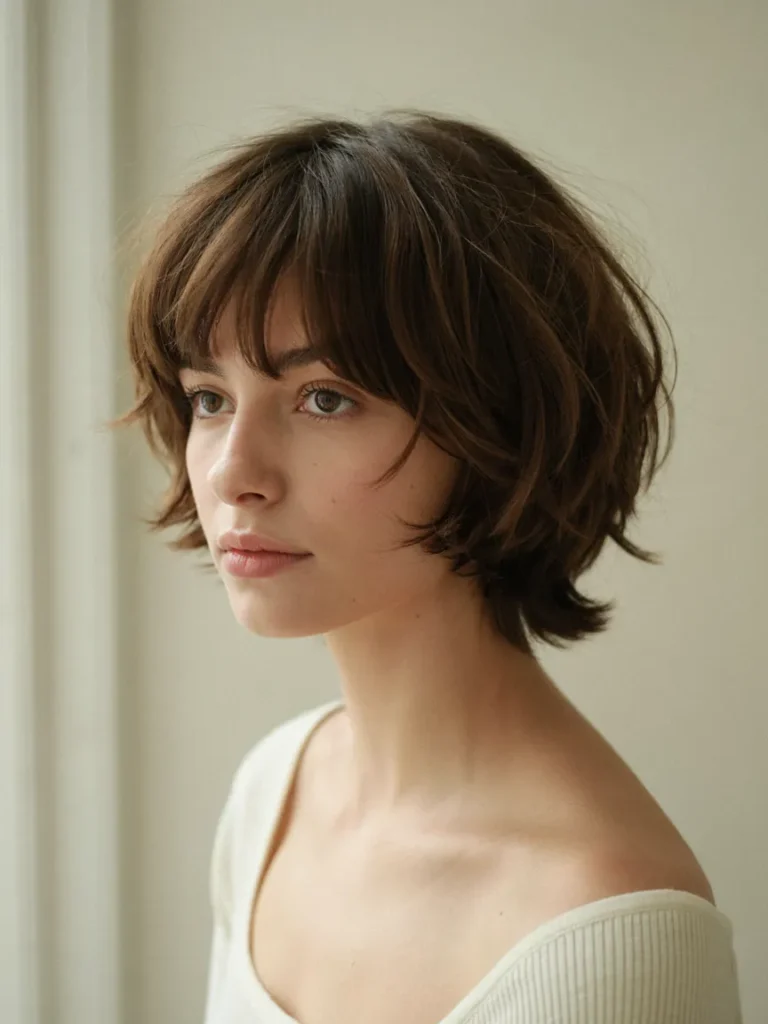
- Start with the silhouette: Ask for a bob-length outline with shorter, textured layers through the crown.
- Customize the fringe: Choose side-swept bangs or a wispy fringe that blends into the temples.
- Create separation: Work a small amount of lightweight texturizing paste through dry ends.
- Keep the shape balanced: Ask your stylist to avoid excessive thinning around the sides if your hair is naturally fine.
Shorter styles can feel surprisingly versatile when the layers are tailored to your natural growth pattern. This hybrid cut combines the outline of a bob with the airy movement of a shag, creating texture without requiring long hair. It works particularly well for people who prefer a shorter routine but still want enough length to tuck behind the ears.
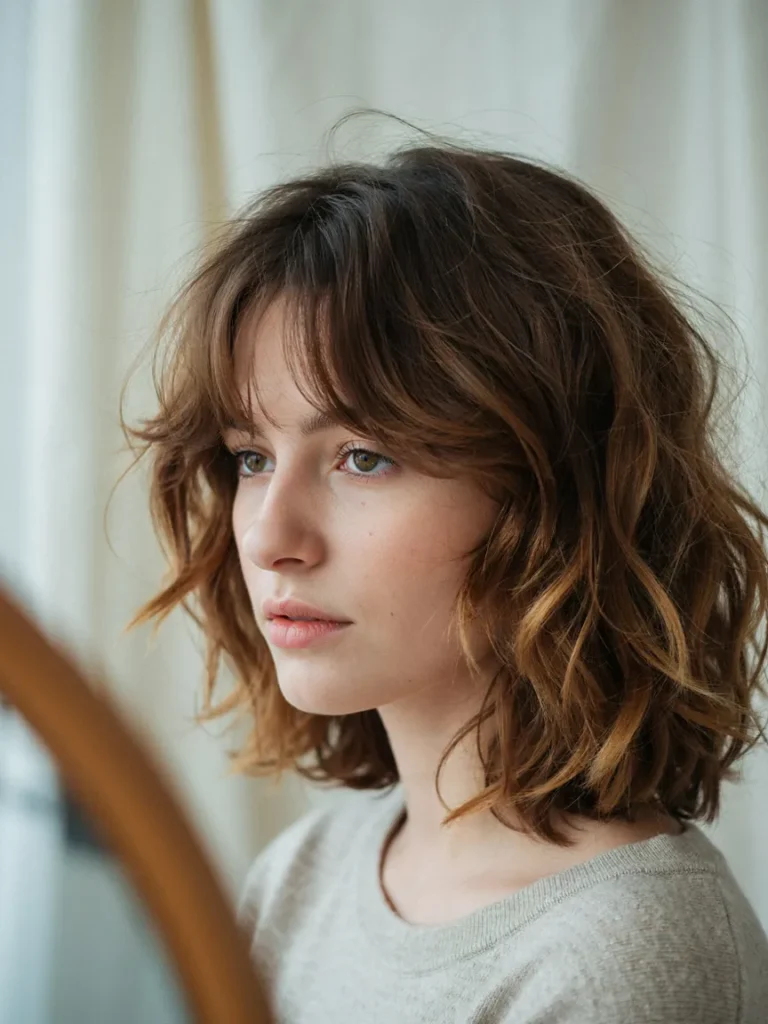
11. Soft Waves With Layers
Quick Tip:
Apply a lightweight mousse to damp hair, then scrunch sections gently to encourage natural waves. If you use a curling iron, alternate the direction of a few sections and leave the ends slightly straighter for a less uniform finish.
Soft waves help reveal the movement built into a layered cut. Instead of creating identical curls from root to tip, aim for loose bends that vary slightly in size and direction. This gives the hair a relaxed finish without making it appear unkempt. For naturally wavy hair, a diffuser may provide enough definition on its own. Fine hair often benefits from a lighter product, while thicker waves may need a small amount of curl cream to control frizz.
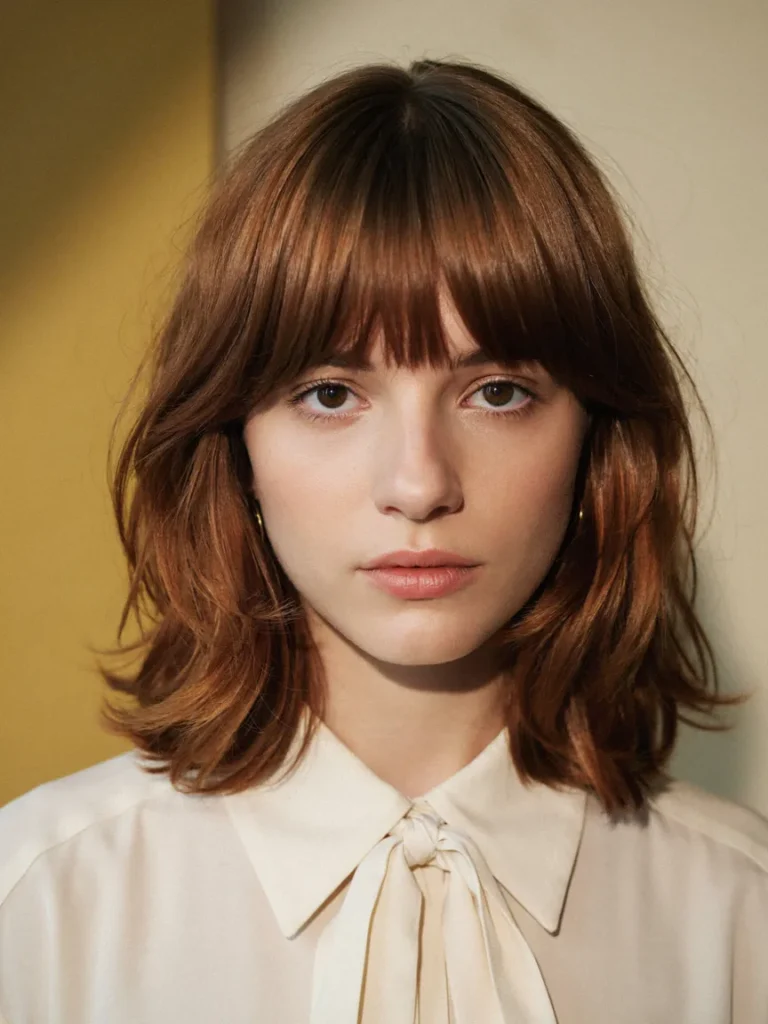
12. Retro Shag With Full Bangs
BEFORE
A single-length haircut can feel heavy around the sides, while a blunt fringe may appear disconnected from the rest of the hair. The overall silhouette can lack the movement associated with vintage-inspired styles.
AFTER
Rounded crown layers create lift, and feathered ends give the cut a softer outline. Full bangs connect the front and sides, producing a recognizable retro shape with a contemporary finish.
For the best result, ask your stylist to blend the fringe into the temple layers rather than leaving a hard line at the sides. This approach helps the haircut grow out more naturally. A large round brush can create a subtle bend in the bangs, while finger-styling the ends keeps the rest of the look relaxed.
13. Shoulder-Length Shag With Highlights
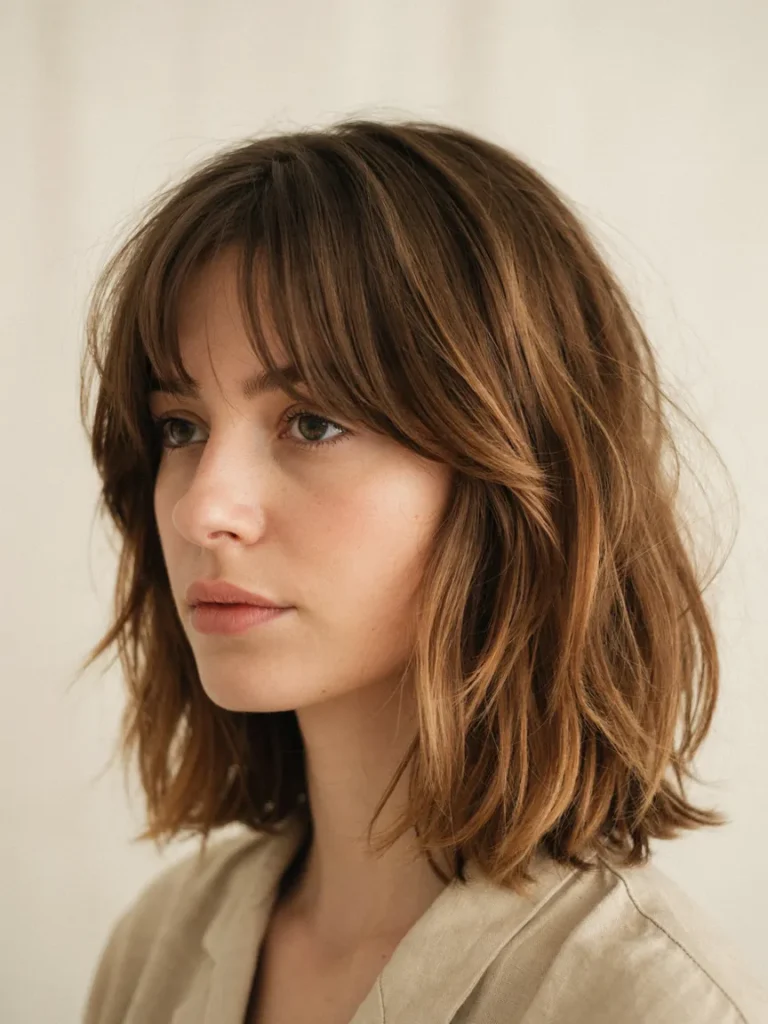
- Choose a base color. Start with your natural brunette or a shade close to your existing color.
- Add subtle dimension. Ask for fine caramel or honey highlights around the face and through selected layers.
- Keep the layers airy. Request feathered ends that move naturally without removing too much fullness.
- Protect the color. Use color-safe shampoo and a heat protectant when styling.
Highlights can make the different lengths in a shag haircut more visible without requiring a dramatic color change. The lighter strands catch the light as the hair moves, giving the overall shape extra depth. For a lower-maintenance result, ask for a soft root blend and strategically placed highlights rather than frequent all-over coloring. The finished style looks especially natural when the color transitions gradually from darker roots to lighter ends.
14. Shaggy Lob With Side Bangs
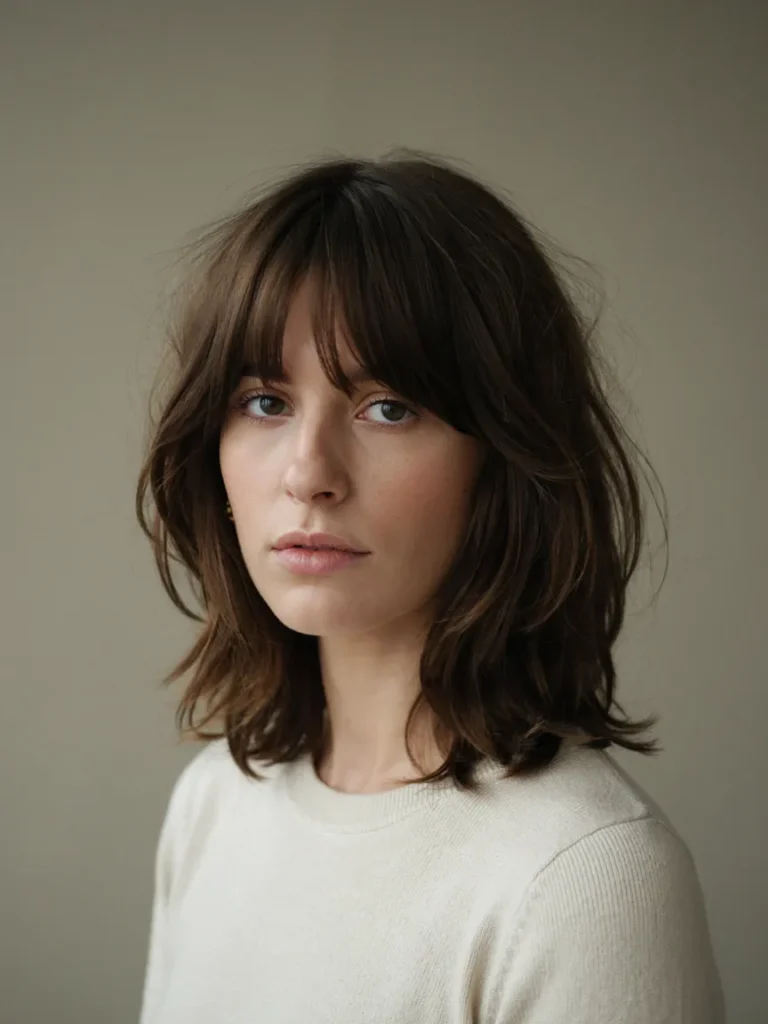
| Feature | Heavy Lob | Shaggy Lob |
| Ends | Blunt and compact | Feathered and textured |
| Fringe | Often straight or absent | Sweeping side bangs |
| Movement | Mostly through the ends | Distributed through the layers |
| Styling | Smooth or polished | Loose and piecey |
| Overall shape | Structured | Relaxed and airy |
A shaggy lob combines collarbone-length versatility with the movement of shorter layers. Side bangs create an angled frame around the face, while textured ends prevent the outline from appearing too solid. Ask your stylist to preserve enough length for ponytails and to blend the fringe into the sides. A quick blow-dry with a round brush can shape the bangs, while the remaining layers can be left natural.
15. Messy Shag With Micro Bangs
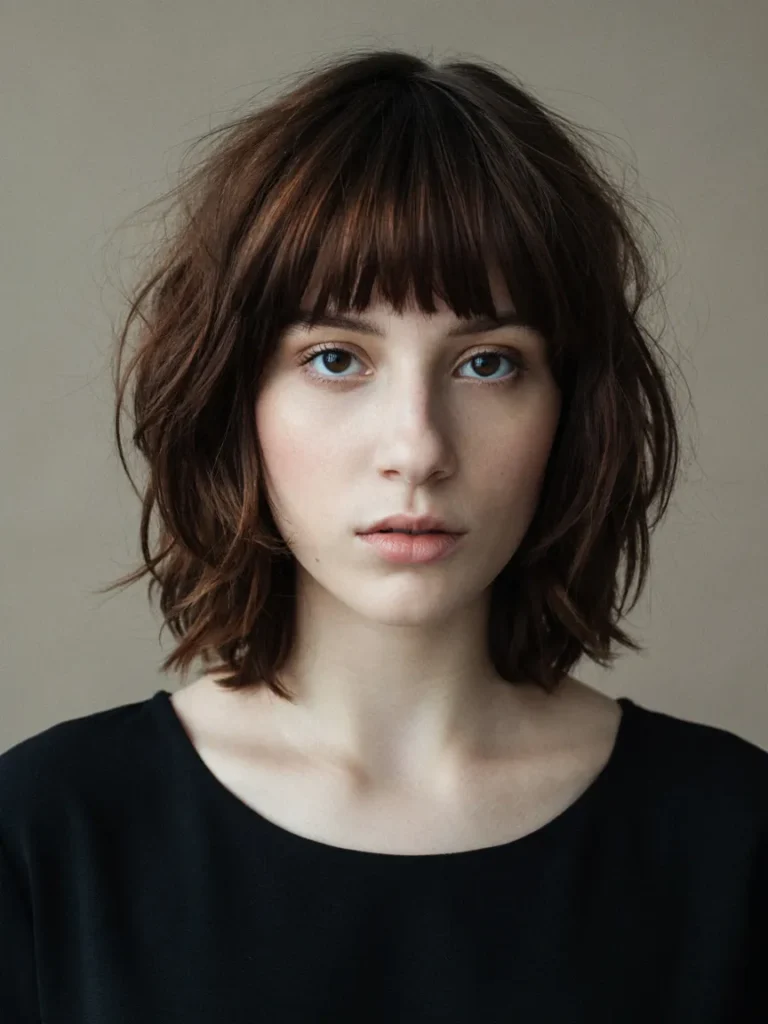
DO:
- Bring reference photos showing the exact fringe length you prefer.
- Ask for textured layers that balance the short bangs.
- Style the ends with a small amount of lightweight paste.
- Consider your natural hairline and growth pattern before committing to micro bangs.
DON’T:
- Cut the fringe extremely short without discussing how it will sit when dry.
- Overload the hair with wax or heavy oils.
- Expect a perfectly uniform fringe to maintain its shape without trims.
- Ignore how much styling time you are comfortable spending.
Micro bangs give a shag a distinctive, fashion-forward edge. Their short length contrasts with the choppy layers, creating a strong visual shape without needing elaborate styling throughout the hair. The fringe does require more frequent maintenance than longer curtain bangs, so consider how quickly your hair grows. If you prefer flexibility, ask your stylist for a slightly longer version that can soften as it grows out.
16. Long Shag With Face-Framing Layers
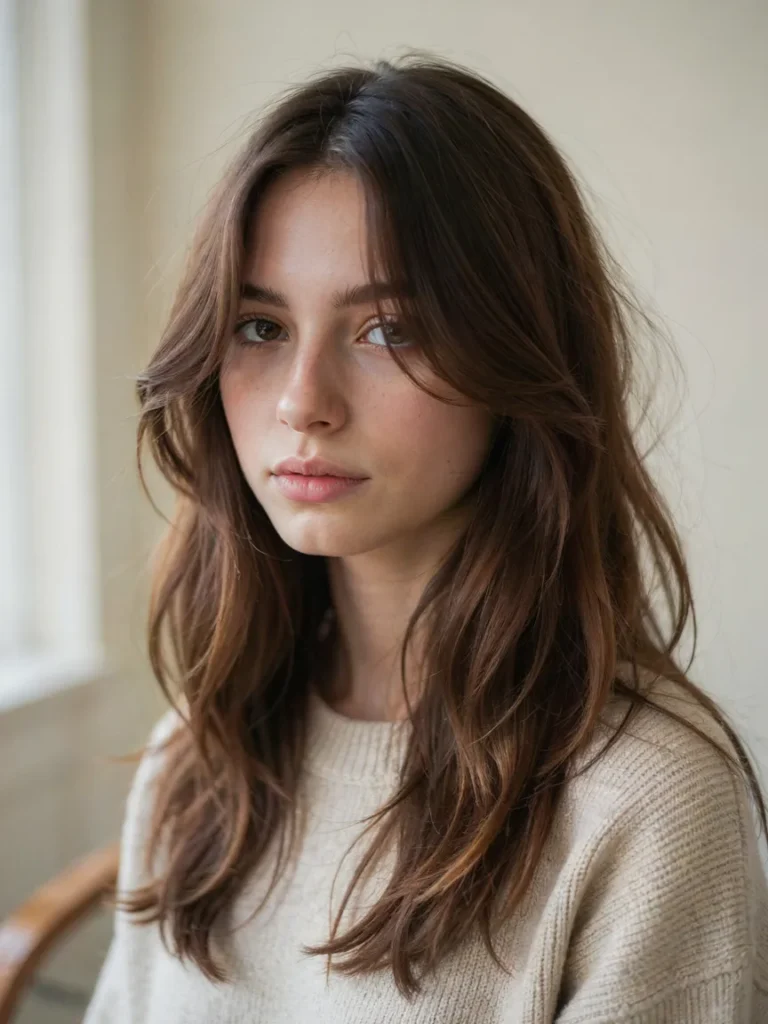
- Length: Long, extending past the shoulders
- Best For: People who want movement without sacrificing overall length
- Styling: Apply lightweight mousse to damp hair and dry with a diffuser or round brush.
Maintenance: Trim periodically to preserve the shape of the shorter layers and face-framing pieces.
Result: A softer outline, visible movement, and a less heavy appearance through the sides
Long layers can change the way hair moves without requiring a dramatic chop. The shorter pieces around the face draw attention toward the eyes and cheekbones, while the longer lengths preserve styling flexibility. Ask your stylist to keep the layers blended if you prefer a subtle finish. For naturally straight hair, a few loose bends around the face can help reveal the shape without making the entire style look overly curled.
17. Short Shag With Textured Crown
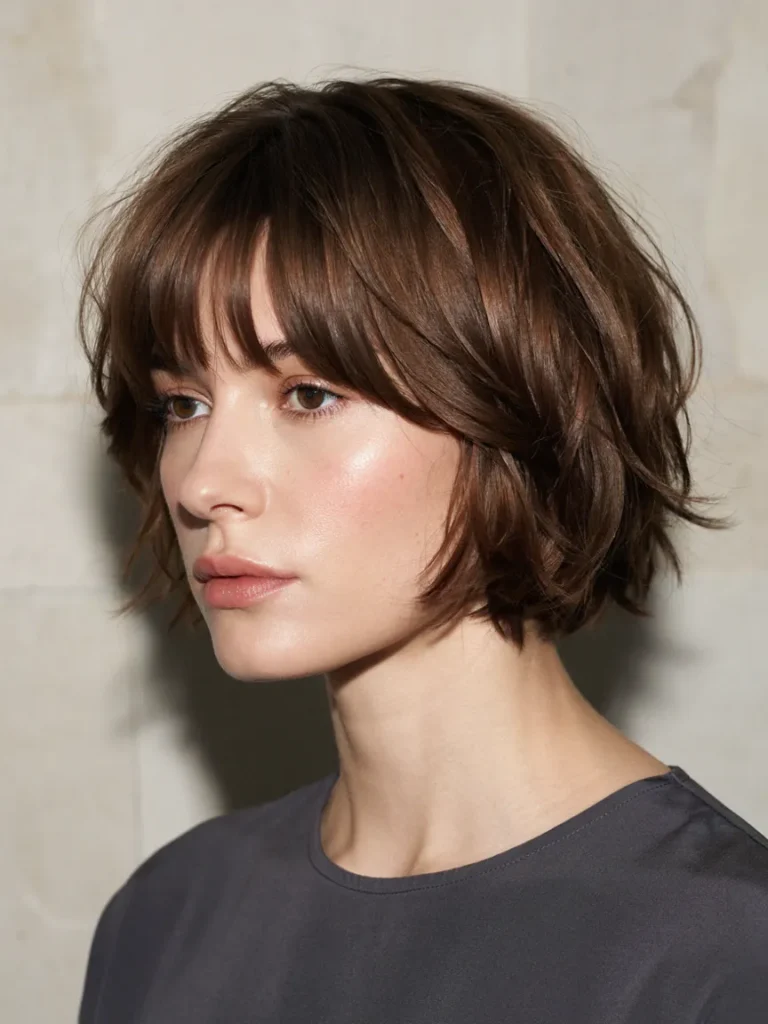
Short hair can have plenty of movement when the crown is cut with carefully placed layers. This version creates lift near the top while keeping the sides and ends soft rather than sharply sculpted.
Ask your stylist to assess your natural part, cowlicks, and hair density before deciding how short the crown layers should be. A lightweight volumizing mousse at the roots can help support the shape, while a fingertip of styling paste defines the ends. Avoid applying heavy conditioner directly to the roots if your hair tends to fall flat. The finished cut is especially practical for anyone who enjoys a shorter hairstyle with visible texture and a little natural messiness.
18. Natural Gray Shag
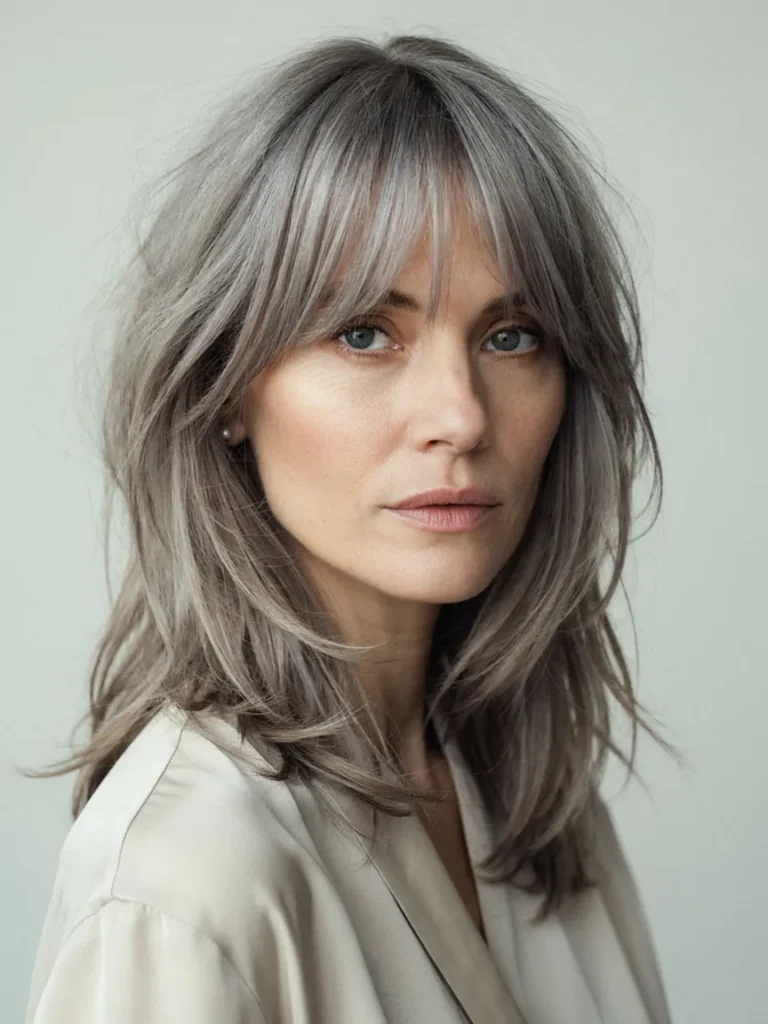
A natural gray shag lets silver and charcoal tones become part of the haircut’s visual texture. The layered shape adds movement, while a softly blended fringe creates a gentle frame around the face.
Before: Gray hair with a single-length cut may feel heavy or lack visible separation, particularly when the strands are thick.
After: Carefully placed layers give the hair a lighter outline and help individual silver tones catch the light.
Ask your stylist whether your hair needs extra moisture or a gentler cutting approach, especially if the texture has changed over time. A lightweight leave-in conditioner can help soften the ends, while occasional purple shampoo may reduce unwanted yellow tones when needed. Use it according to the product directions to avoid over-toning. Natural gray hair does not need elaborate styling to show off a beautifully shaped cut.
19. Shag With Bottleneck Bangs
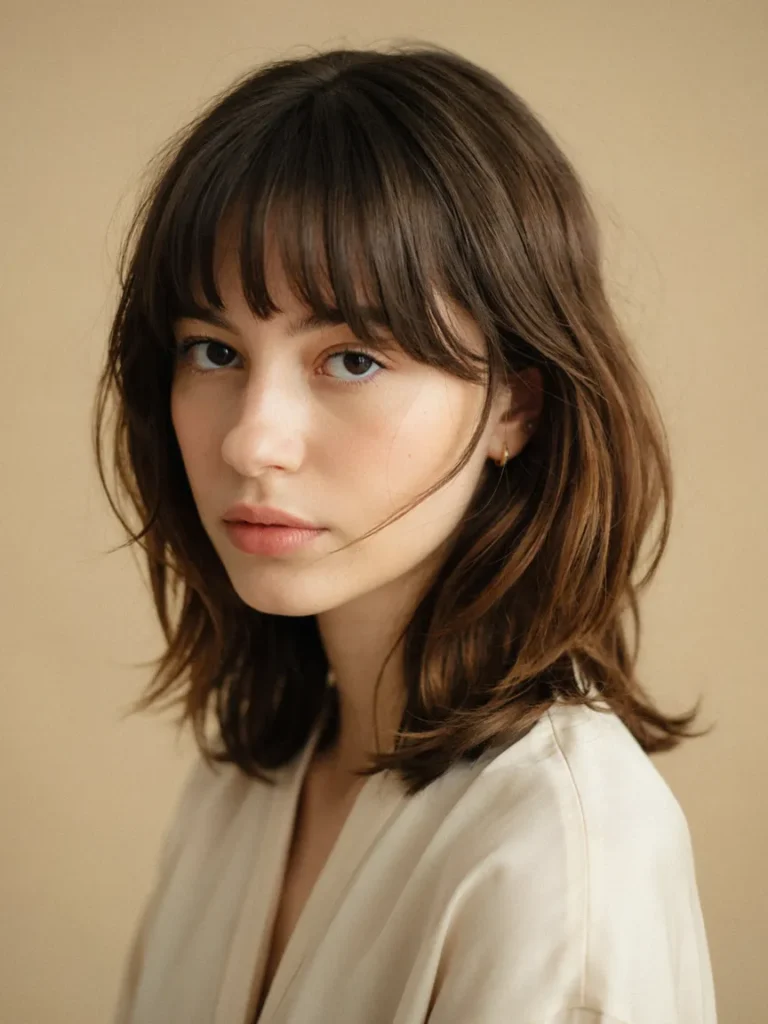
- Shape the fringe: Ask for shorter bangs near the center of the forehead that gradually widen around the eyebrows and cheekbones.
- Blend the sides: Request face-framing layers that connect the fringe to the rest of the haircut.
- Create soft movement: Apply a lightweight styling cream to damp hair and shape the bangs with a small round brush.
- Keep the finish natural: Separate a few ends with your fingers instead of making every section perfectly smooth.
Bottleneck bangs offer a softer alternative to a straight, heavy fringe. Their curved shape works naturally with the feathered layers of a shag, creating a connected frame around the face. They can suit straight, wavy, and lightly curly textures when the length is customized appropriately. If your hair has a strong cowlick near the forehead, discuss how the bangs will behave before choosing their shortest point.
20. Beachy Blonde Layers
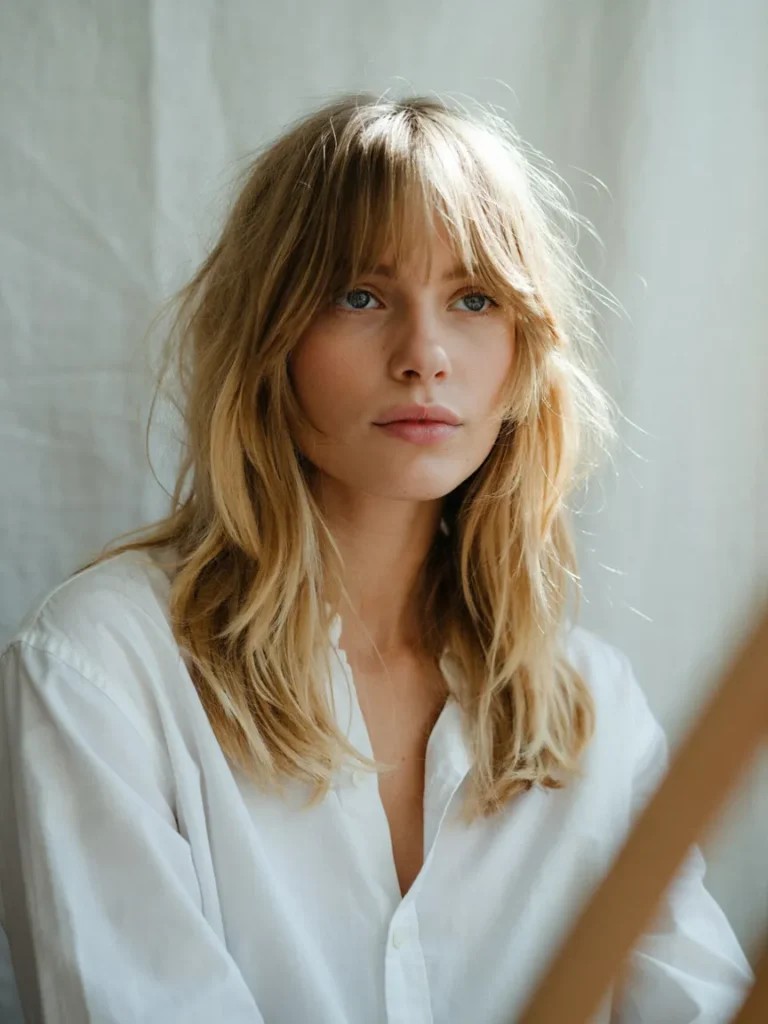
| Feature | Polished Waves | Beachy Layers |
| Wave pattern | Even and defined | Loose and irregular |
| Ends | Smooth and uniform | Slightly separated |
| Volume | Controlled throughout | Airy around the crown |
| Products | Smoothing cream | Lightweight mousse or texturizing spray |
| Finish | Refined | Relaxed and naturally tousled |
Beachy layers give a shag a casual finish that works beyond summer. The loose waves reveal the different lengths, while lighter blonde pieces add dimension as the hair moves. Start with a small amount of texturizing spray rather than coating every section. If your hair is naturally straight, create a few loose bends with a curling wand and leave the ends out for a softer result.
21. Shag With Flipped Ends

Quick Tip:
Use a medium round brush to direct the ends slightly outward as you dry each section. Finish with a light flexible-hold hairspray so the movement stays soft rather than stiff.
Flipped ends bring a subtle retro influence to layered hair without requiring a full vintage blowout. The outward movement highlights the haircut’s uneven lengths and gives the bottom edge a playful shape. For a natural finish, alternate a few sections rather than flipping every strand in exactly the same direction. This technique works especially well on shoulder-length cuts, where the ends have enough length to bend without looking overly curled.
22. Voluminous Curly Layers
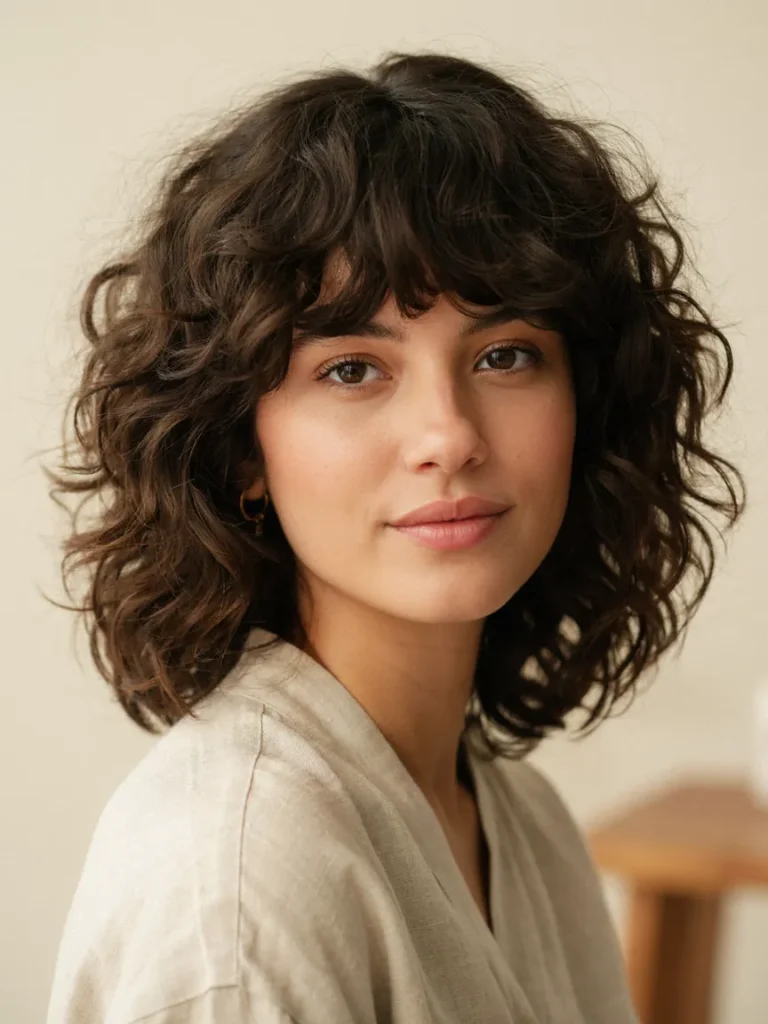
DO:
- Ask for layers that support your natural curl pattern and desired silhouette.
- Discuss how much volume you want at the crown and sides.
- Use a curl cream or leave-in conditioner suited to your hair texture.
- Let the curls dry fully before gently separating them.
DON’T:
- Cut the hair based only on its wet length.
- Remove too much density from the ends without discussing the result.
- Handle curls excessively while they dry.
- Assume every curl will shrink or spring up by the same amount.
A rounded, curly shag distributes volume more evenly than a heavy, one-length cut. The shorter layers encourage lift near the crown, while the longer curls help maintain a balanced outline. Your stylist should account for shrinkage and the way your curls naturally cluster. With the right shape, the hair can look full and defined without needing every ringlet to sit in exactly the same position.
23. Piecey Fringe With Layers
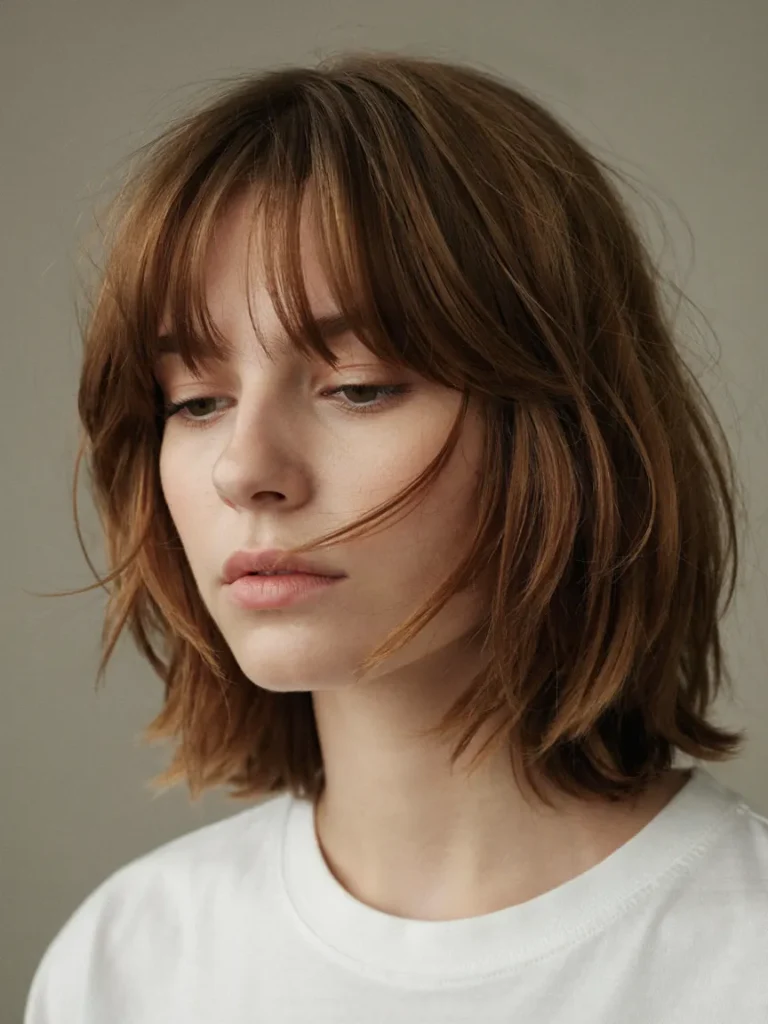
- Best For: People who prefer a relaxed fringe with visible separation
- Styling Time: Approximately 5 to 10 minutes, depending on hair texture
- Key Detail: Lightly separated bangs that blend into the surrounding layers
- Product Choice: Lightweight styling cream or flexible-hold texturizing spray
- Maintenance: Trim the fringe as needed to keep it out of your eyes
A piecey fringe creates definition without the solid line of blunt bangs. Small gaps between the sections let the forehead show through, making the front feel lighter and less structured. To style it, direct the fringe forward while blow-drying, then separate a few pieces with your fingertips. Use very little product near the roots so the bangs retain their movement instead of clumping together.
24. Brunette Shag With Curtain Fringe
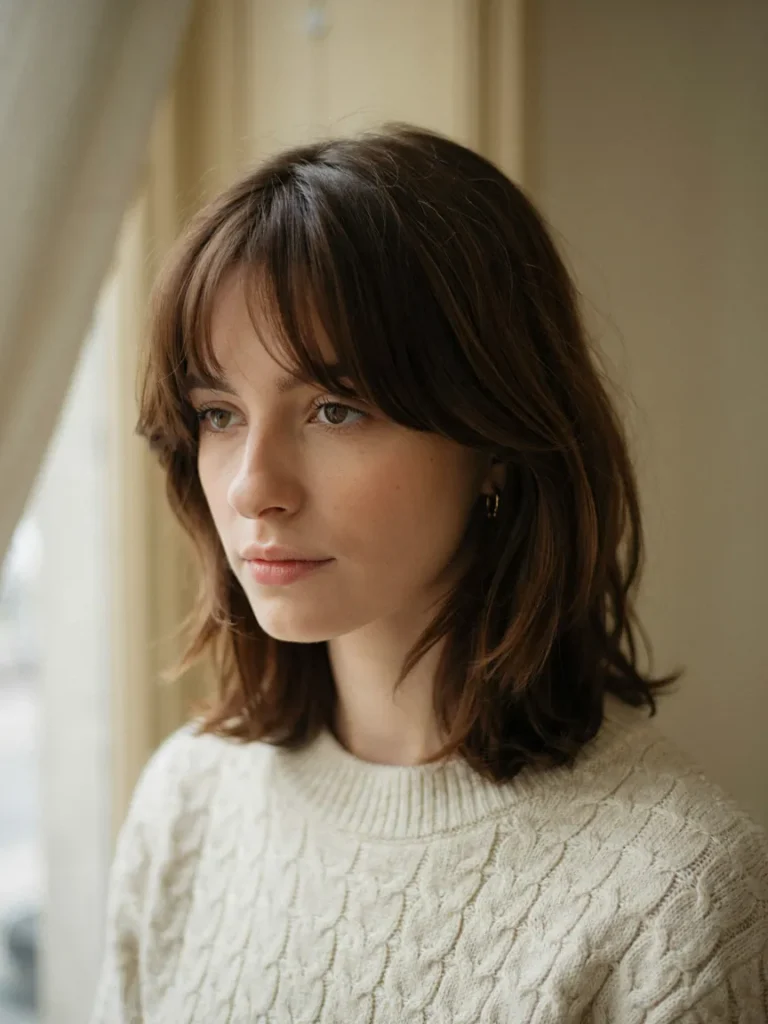
BEFORE
Long, heavy layers can fall close to the face, leaving the front sections without much visible movement. A center part may also appear flat when the fringe has no shaping.
AFTER
A curtain fringe opens around the forehead and blends into shorter face-framing layers. The result adds movement near the cheeks while preserving the brunette hair’s rich, dimensional appearance.
Ask your stylist to tailor the shortest pieces to your preferred fringe length and natural part. For everyday styling, dry the front sections away from the face using a round brush, then allow the remaining layers to fall naturally. If your hair is fine, keep the fringe light without removing too much fullness from the front.
25. Effortless Mid-Length Shag
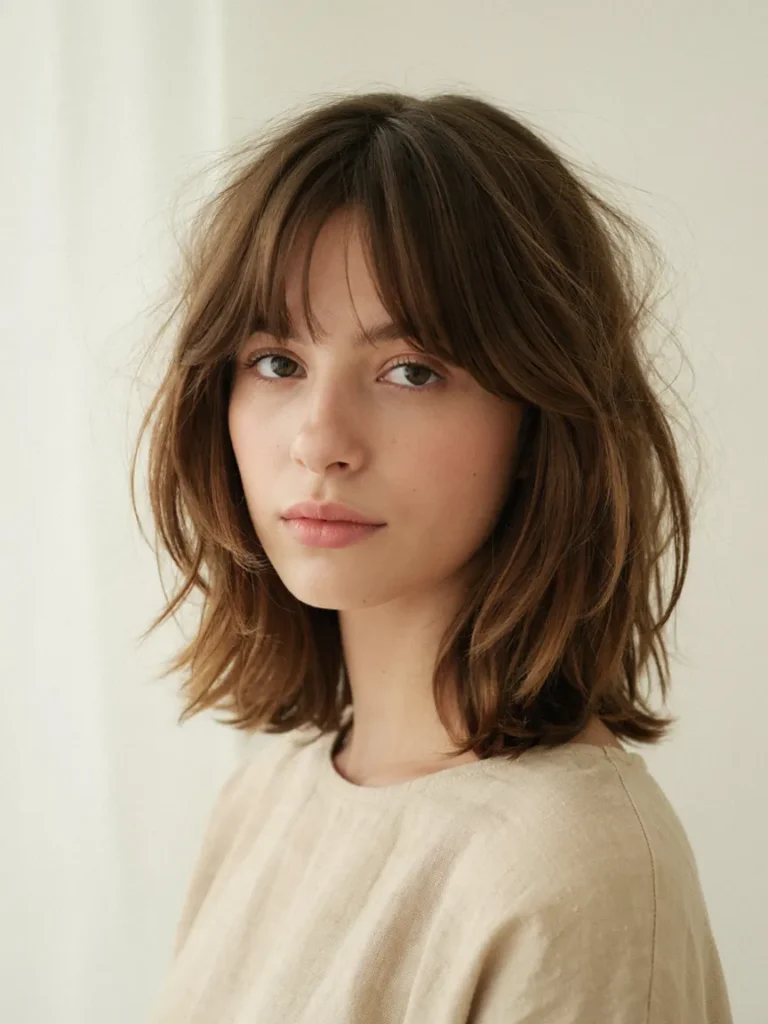
- Choose your length. Ask for a cut that falls around the shoulders or slightly below, depending on how much length you want to preserve.
- Add movement. Request blended layers around the crown, sides, and ends to create a relaxed silhouette.
- Shape the fringe. Consider curtain bangs or wispy face-framing pieces that complement your natural part.
- Keep styling simple. Apply lightweight mousse to damp hair, scrunch gently, and air-dry or diffuse on low heat.
The mid-length shag brings together the versatility of longer hair and the movement of a shorter, textured cut. It can work with straight, wavy, and curly hair when the layers are adapted to the individual’s density and natural pattern. In my experience, the most wearable versions preserve enough fullness at the ends while adding texture around the face. The best finish is one that suits your daily routine, not one that requires perfect styling every morning.
CONCLUSION
The right haircut can make your everyday routine feel easier while giving your hair a fresh sense of movement and personality. These 25 Shag Haircuts offer inspiration for every mood, from soft and subtle layers to bold fringes and beautifully messy curls.
Remember, you don’t need to copy a look exactly. Choose the details you love, consider your natural texture, and ask your stylist to adapt the shape to your hair and lifestyle. Save this article on Pinterest so your favorite ideas are ready for your next salon visit, and share it with a friend looking for a fresh hairstyle. Your next favorite look might be just one haircut away!