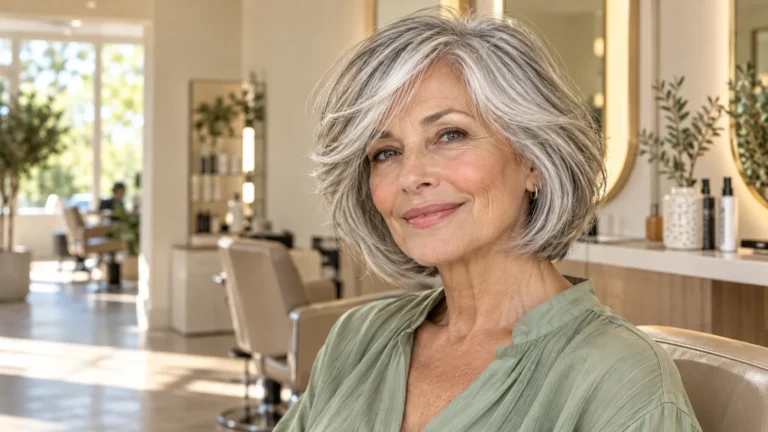
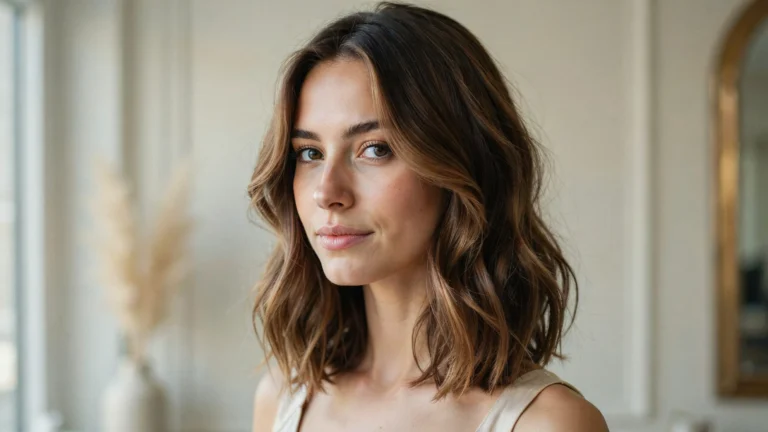
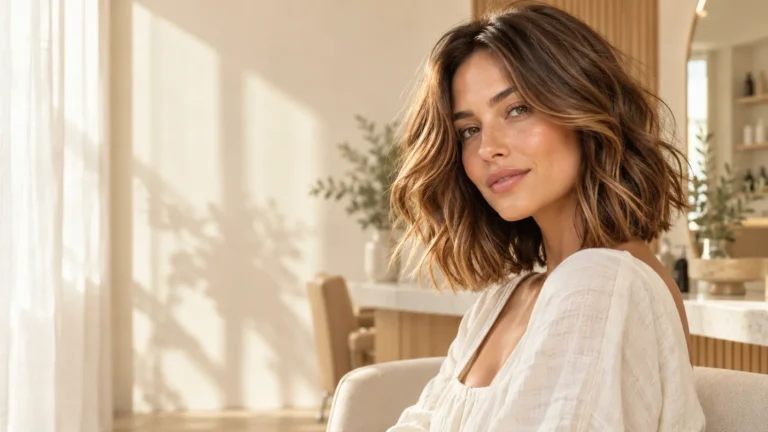
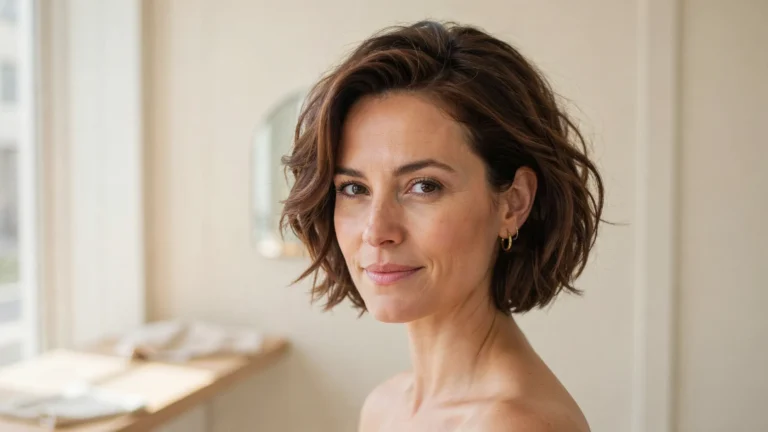
The right haircut can beautifully frame your face, highlight your cheekbones, and give your everyday look a fresh new feel. The secret isn’t changing your face shape. It’s finding a hairstyle that works with your natural features.
These haircuts for round faces offer 22 inspiring ways to explore flattering layers, stylish bobs, soft bangs, and modern pixie cuts. Whether you love long, flowing hair or prefer a short, low-maintenance style, you’ll find ideas worth saving for your next salon visit.
Sometimes, a small change makes the biggest difference. Face-framing layers can add movement, side-swept bangs can create a lovely diagonal line, and extra volume at the crown can give your hairstyle a more elongated appearance. I’ve noticed that choosing a cut that suits your hair texture and daily routine often makes styling feel much easier. Explore these looks, discover your favorites, and save the ones you’d love to try.
1. Long Layered Haircut
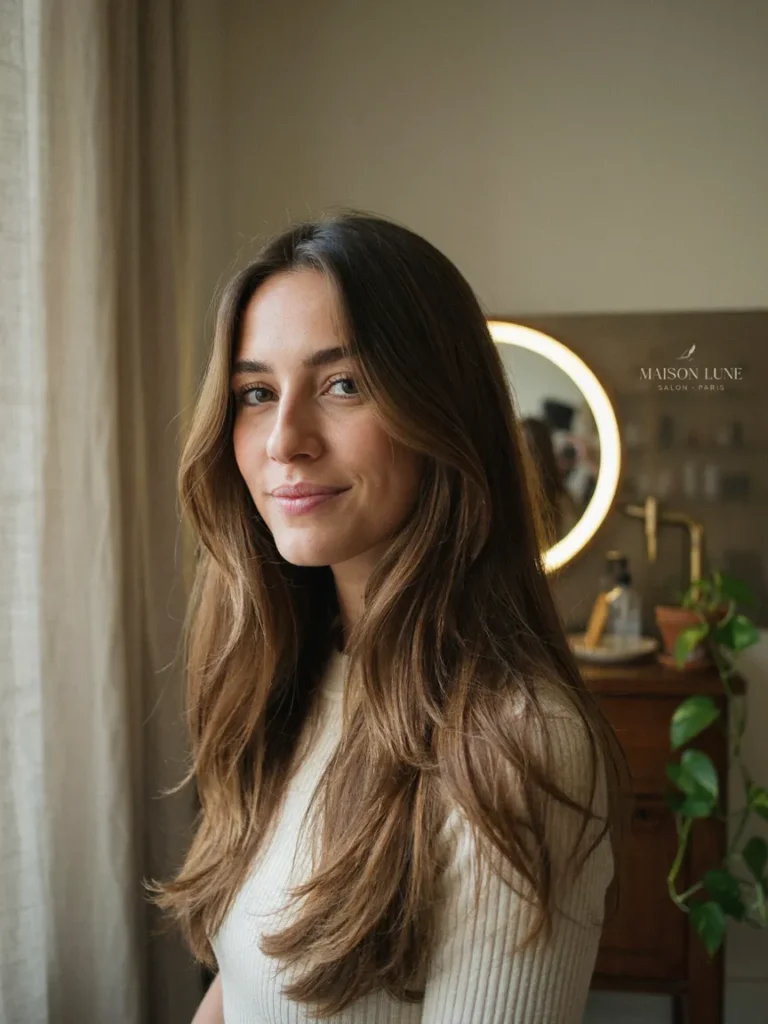
Long, flowing layers create graceful movement while drawing attention downward, giving the face a more elongated appearance. This cut works especially well when the shortest layers begin below the cheekbones rather than directly across the widest part of the cheeks.
Ask your stylist for blended layers that start around the chin or collarbone. Keep the ends soft instead of heavily blunt, and add a gentle blowout for extra movement. Among the most versatile haircuts for round faces, this style suits medium to thick hair and looks lovely with both center and slightly off-center parts.
2. Side-Swept Bangs
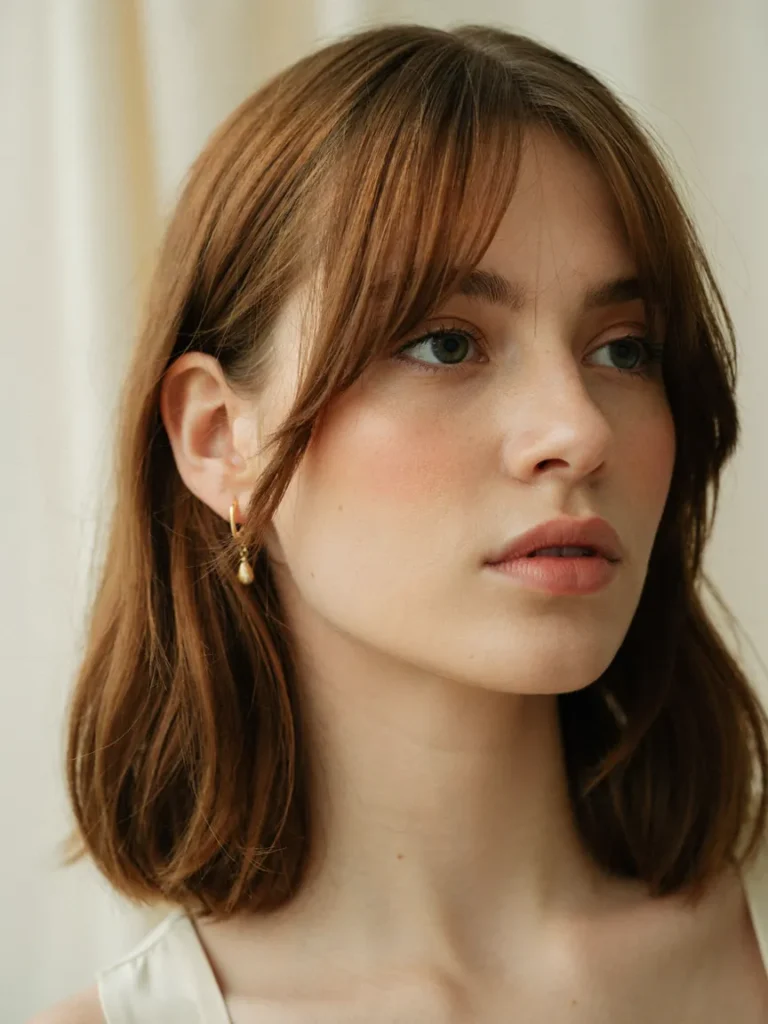
- Diagonal framing: Sweep the fringe across the forehead to create an angled line that visually breaks up facial symmetry.
- Soft length: Keep the bangs long enough to blend into the sides of the haircut.
- Light texture: Ask for feathered ends rather than a thick, straight fringe.
- Flexible styling: Blow-dry the bangs with a round brush, directing them away from the face for a soft curve.
- Easy maintenance: Schedule trims as needed to keep the fringe from falling into your eyes.
Side-swept bangs are especially useful when you want a noticeable change without losing much length. They draw attention toward the eyes and temples while creating a softer transition around the cheeks. For the most natural result, choose a fringe that blends into your existing layers instead of ending in a sharp line.
3. Textured Lob Cut

Quick Tip:
Ask for a lob that falls just below the chin or near the collarbone, depending on your preferred length. Slightly longer front pieces can create a flattering vertical line without making the haircut feel heavy.
The textured lob combines the freshness of shorter hair with enough length to frame the face. Its lightly separated ends prevent the shape from looking like a solid horizontal block across the cheeks. For extra movement, style with a large-barrel curling iron, alternating loose bends and leaving the ends relatively straight. A center or off-center part can both work well, so choose the one that feels most comfortable for your daily routine.
4. Angled Bob Cut

BEFORE: A blunt bob ending at the widest part of the cheeks can create a strong horizontal line. The overall shape may appear wider than intended, especially when the hair has little movement.
AFTER: An angled bob with longer front sections creates a diagonal frame around the jaw. The shorter back adds shape and volume without making the sides look bulky.
For the most flattering result, ask your stylist to keep the front pieces slightly longer than the back. This cut works particularly well with straight or gently wavy hair. A smooth finish highlights the angle, while a few loose bends create a relaxed, modern look.
5. Curtain Bangs With Layers
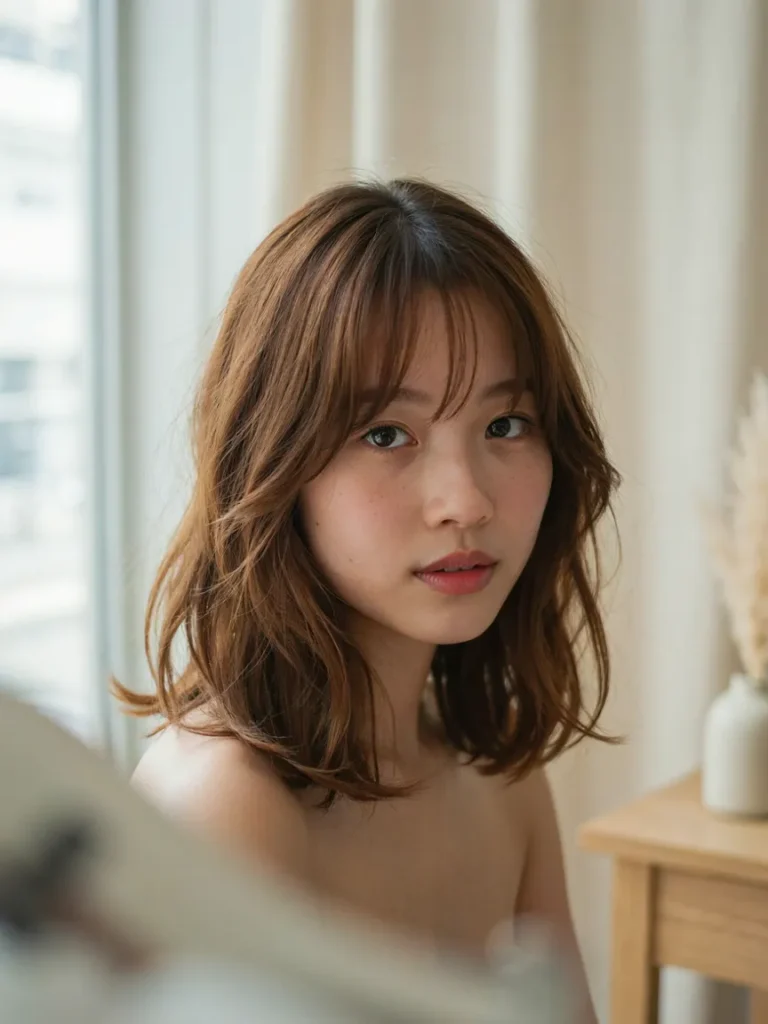
- Create the center part. Divide the fringe naturally down the middle, allowing each side to curve away from the forehead.
- Choose cheekbone-grazing pieces. Ask for longer bangs that blend gradually into the sides rather than ending in a thick, blunt line.
- Add blended layers. Keep the layers soft around the jaw and collarbone to encourage movement.
- Style with a round brush. Direct each side away from the face, then let the hair cool before adjusting the shape.
Curtain bangs bring attention toward the eyes while their curved shape softens the forehead and cheek area. Paired with long layers, they create a balanced silhouette without requiring a dramatic haircut. They are also easy to grow out, making them a practical choice for anyone testing bangs for the first time.
6. Deep Side-Part Bob
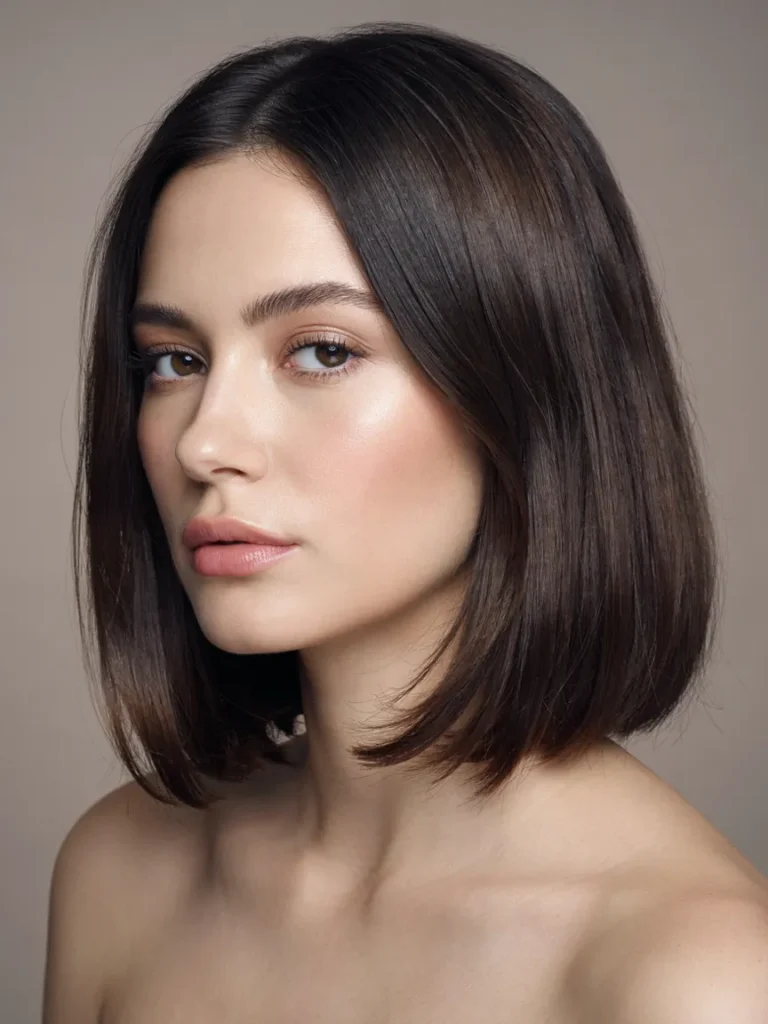
| Feature | Deep Side Part | Center Part |
| Visual effect | Creates an asymmetrical frame | Creates a balanced frame |
| Root styling | Adds lift to one side | Distributes volume evenly |
| Overall finish | Dramatic and sophisticated | Minimal and modern |
| Best styling | Smooth sweep with soft volume | Sleek finish or loose waves |
A deep side part changes the way a bob frames the face without requiring extra length. The diagonal fringe draws the eye across the forehead, while the lifted roots add dimension near the crown. For a softer finish, keep the ends slightly curved and avoid excessive width at cheek level. This style works with straight hair and loose waves, making it easy to adapt to different textures.
7. Face-Framing Butterfly Cut
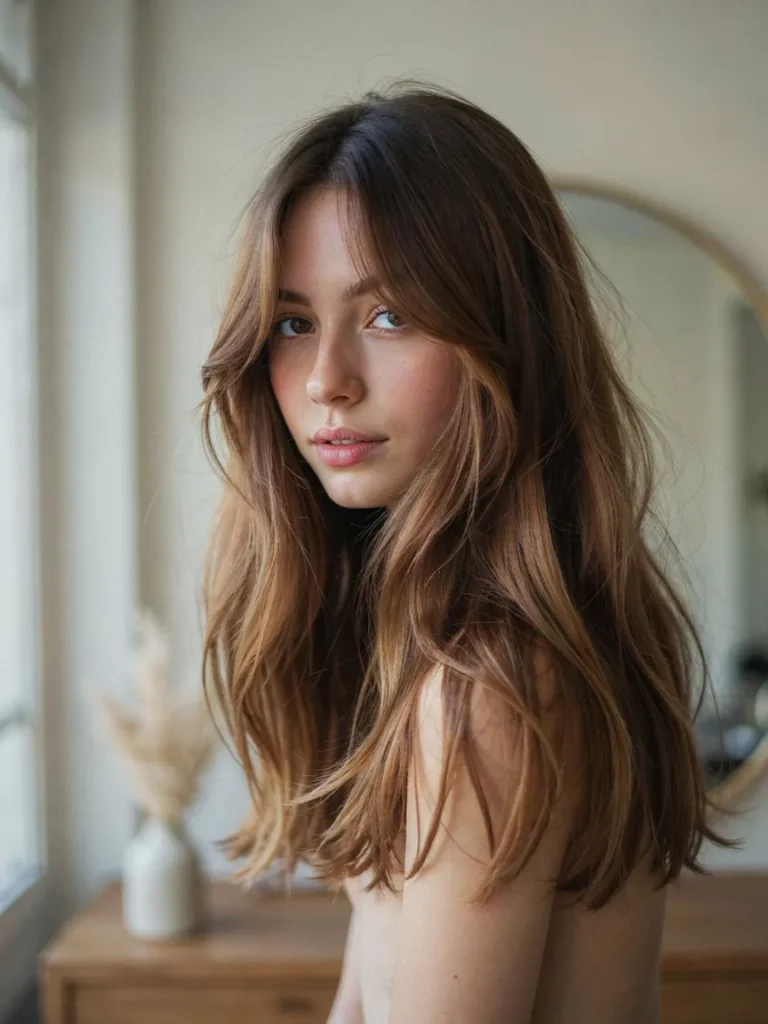
DO:
- Ask for shorter front layers that blend from around the chin downward.
- Keep the longest layers below the shoulders for a flowing silhouette.
- Add gentle crown volume to create height without excessive width.
- Style the front pieces away from the face with a round brush.
DON’T:
- Cut the shortest layers directly across the widest part of the cheeks.
- Request excessive thinning if your hair already lacks volume.
- Create too many disconnected layers that leave the ends looking sparse.
- Overcurl the sides into a wide, rounded shape.
The butterfly cut offers the movement of shorter hair around the face while preserving long lengths at the back. Its sweeping layers can highlight the cheekbones and bring attention to the eyes. Ask your stylist to customize the shortest pieces to your face shape and natural hair texture for an airy, balanced finish.
8. Shoulder-Length Shag
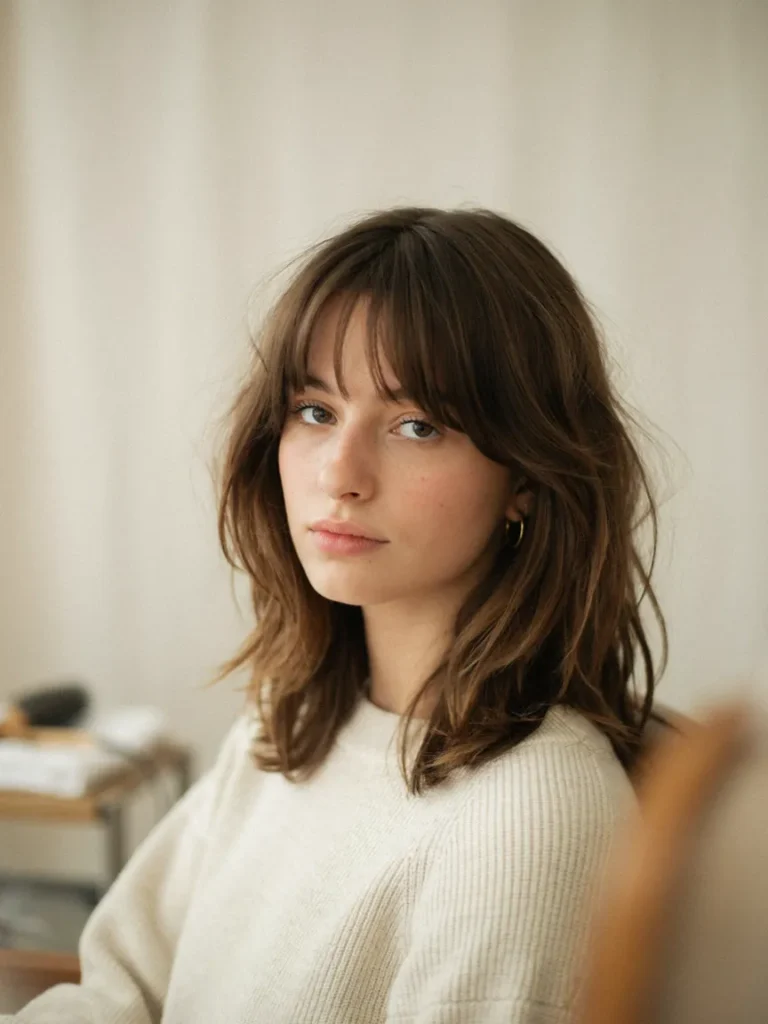
Best For: Naturally wavy hair and anyone who enjoys relaxed texture.
Length: Between the shoulders and collarbone.
Styling Time: Approximately 5 to 10 minutes with a simple daily routine.
Finish: Airy layers, soft fringe, and movement around the jaw.
A shoulder-length shag adds texture without relying on a perfectly smooth blowout. The feathered layers create separation, while a wispy fringe brings attention toward the eyes. For a more elongated appearance, ask for volume near the crown and less bulk around the sides. A lightweight styling cream can define natural waves without making the hair feel stiff or heavy.
9. Long Hair With Wispy Bangs
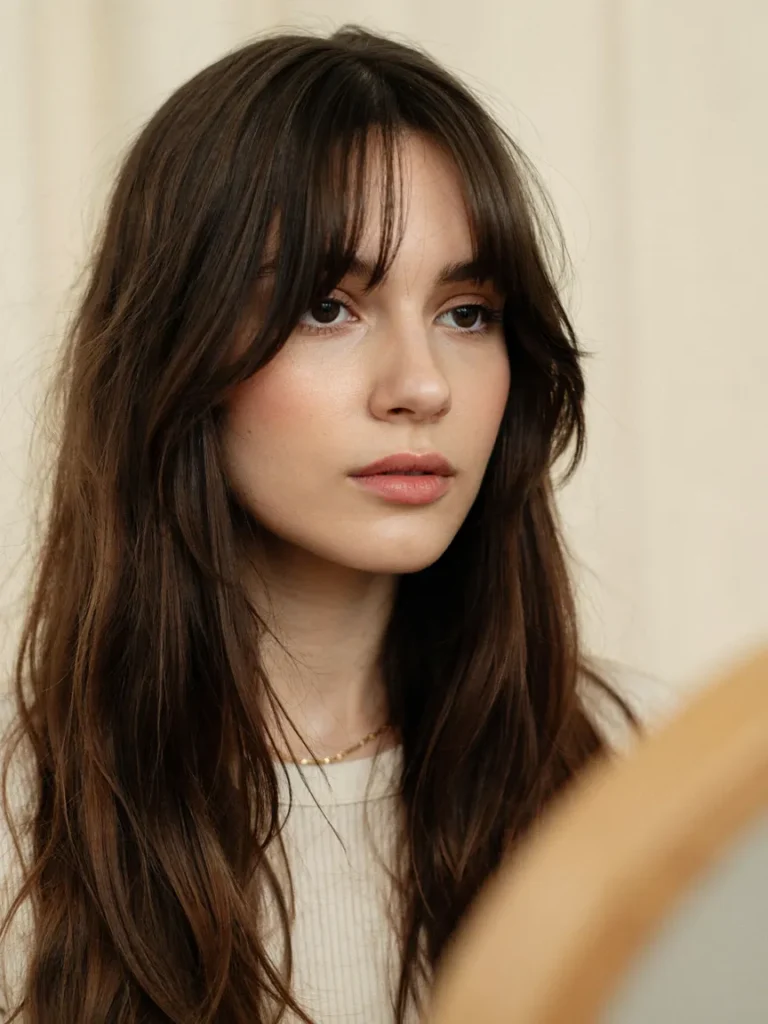
Long hair paired with wispy bangs creates a soft frame without hiding the entire forehead. The delicate fringe allows some forehead to remain visible, while the longer sides guide attention toward the eyes and cheekbones.
Keep the bangs light and slightly separated instead of cutting them into a dense, straight block. Ask for subtle face-framing pieces that blend into the lengths around the jaw. A smooth blowout creates a polished finish, while loose waves add casual texture. This combination suits many hair types, although very fine hair may need a lighter fringe to preserve fullness through the ends.
10. Choppy Pixie Cut
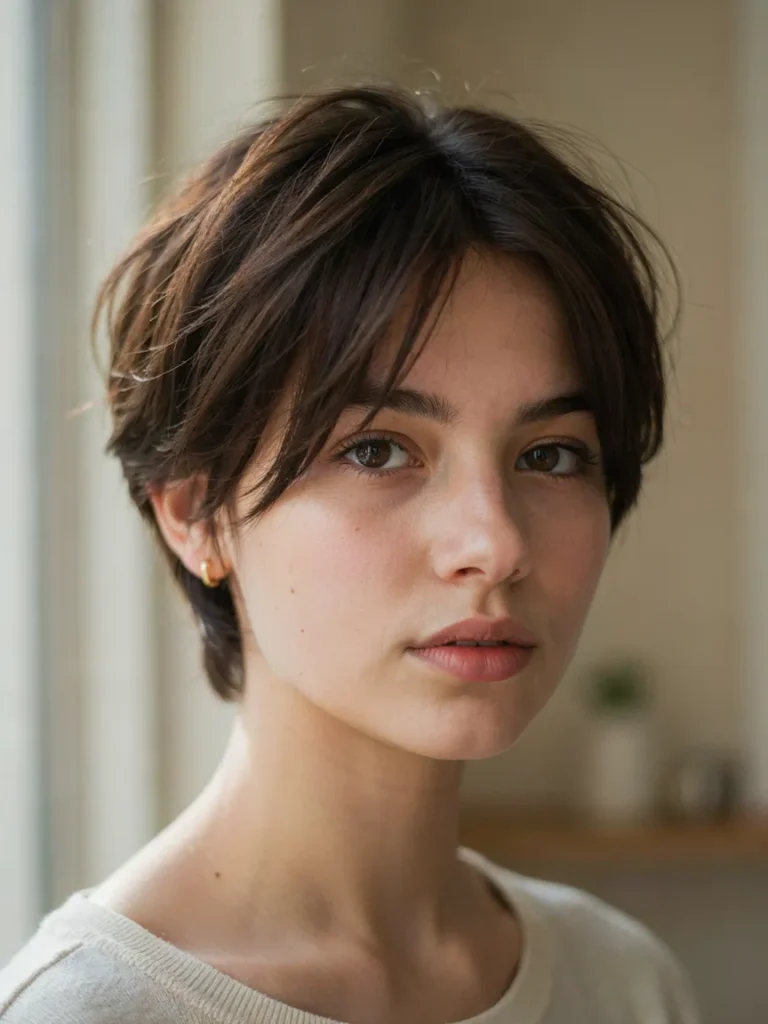
- Choose a longer fringe: Sweep the front section diagonally across the forehead for an asymmetrical frame.
- Add crown texture: Ask for short, piecey layers that create gentle height at the top.
- Keep the sides soft: Avoid excessive width around the temples if you prefer a more elongated silhouette.
- Use lightweight styling paste: Define individual strands without weighing down the hair.
A choppy pixie creates a fresh, confident look while drawing attention toward the eyes and upper face. The textured crown adds dimension, and the longer fringe introduces an angled line that can balance rounded features. Before cutting, discuss your natural hair growth pattern with your stylist, since cowlicks and hair density affect how a pixie sits between washes.
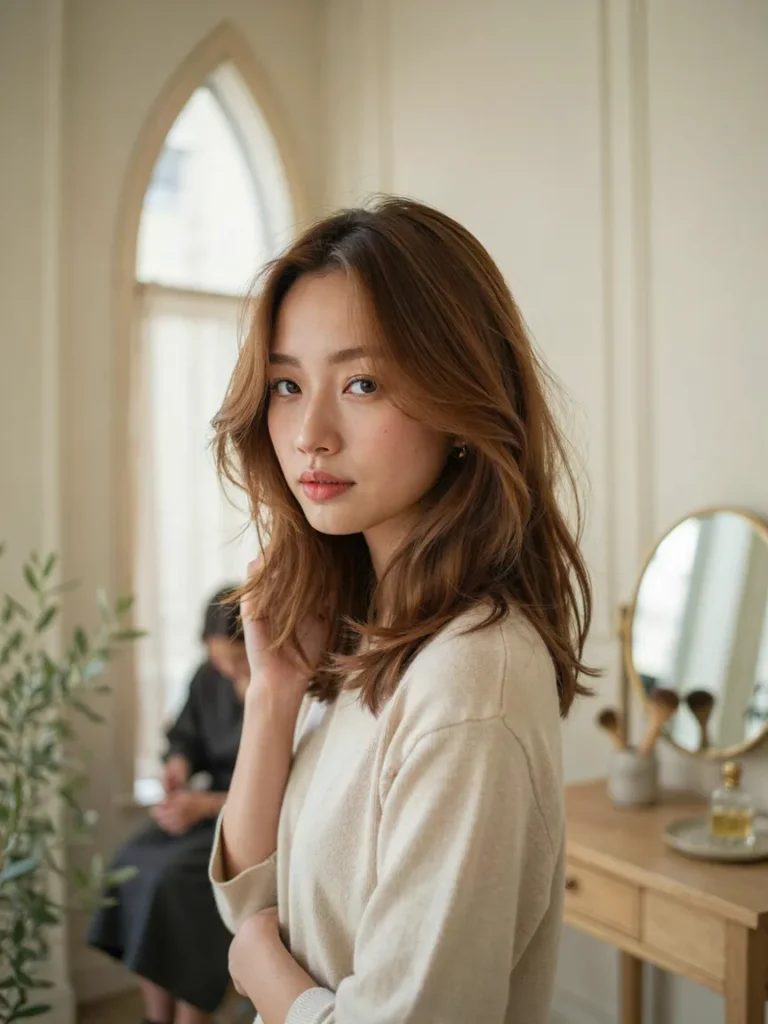
11. Collarbone-Length Layers
Quick Tip:
Ask your stylist to keep the perimeter around the collarbone while adding long, blended layers. This preserves fullness at the ends and prevents the haircut from forming a heavy line across the cheeks.
Collarbone-length layers offer a useful middle ground between a short bob and long hair. The length creates a vertical frame, while the layers help the hair move naturally around the jawline. I’ve noticed that styling the front sections slightly away from the face can make this cut look especially polished. It also works well for ponytails, half-up hairstyles, and everyday blowouts.
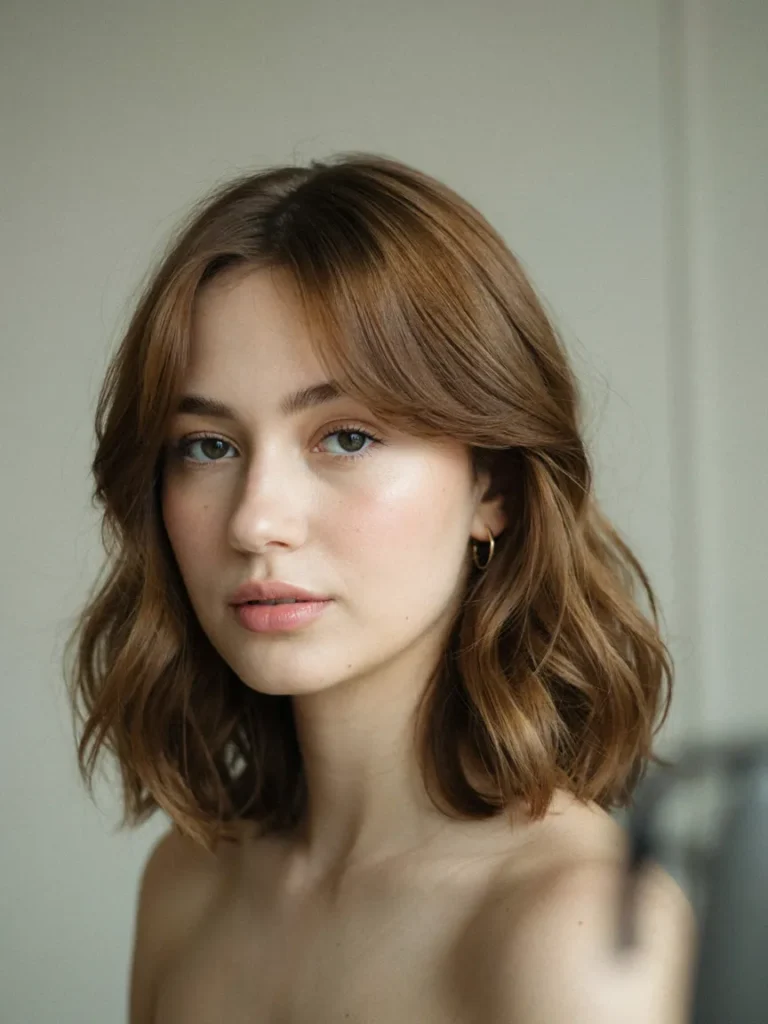
12. Soft Wavy Lob
BEFORE
A one-length lob with heavy, rounded waves can create extra width around the cheeks. When the waves all curve in the same direction, the overall silhouette may look fuller at the sides.
AFTER
Loose, alternating waves create movement and separate the hair into softer sections. Slightly straighter roots and ends help maintain length in the overall shape.
For a flattering finish, curl medium-sized sections away from the face near the front, then alternate directions through the back. Let the curls cool before gently loosening them with your fingers. Keep the wave pattern relaxed rather than tightly curled, especially around cheek level. The result is a versatile, textured lob that looks polished without appearing overly styled.
13. Asymmetrical Bob

- Choose the longer side. Decide which side will carry the longer front section based on your preferred parting.
- Create a gradual angle. Ask your stylist to blend the shorter side into the longer section rather than creating an abrupt step.
- Keep the ends defined. A clean outline helps the asymmetrical shape remain visible.
- Style with a smoothing brush. Direct the longer section diagonally across the face for a polished finish.
An asymmetrical bob introduces a diagonal line that contrasts with the rounded outline of the cheeks. Its uneven lengths add visual interest without requiring elaborate styling. For a softer everyday version, keep the angle subtle and allow a little natural texture through the ends. Regular trims will help maintain the shape as the shorter sections grow.
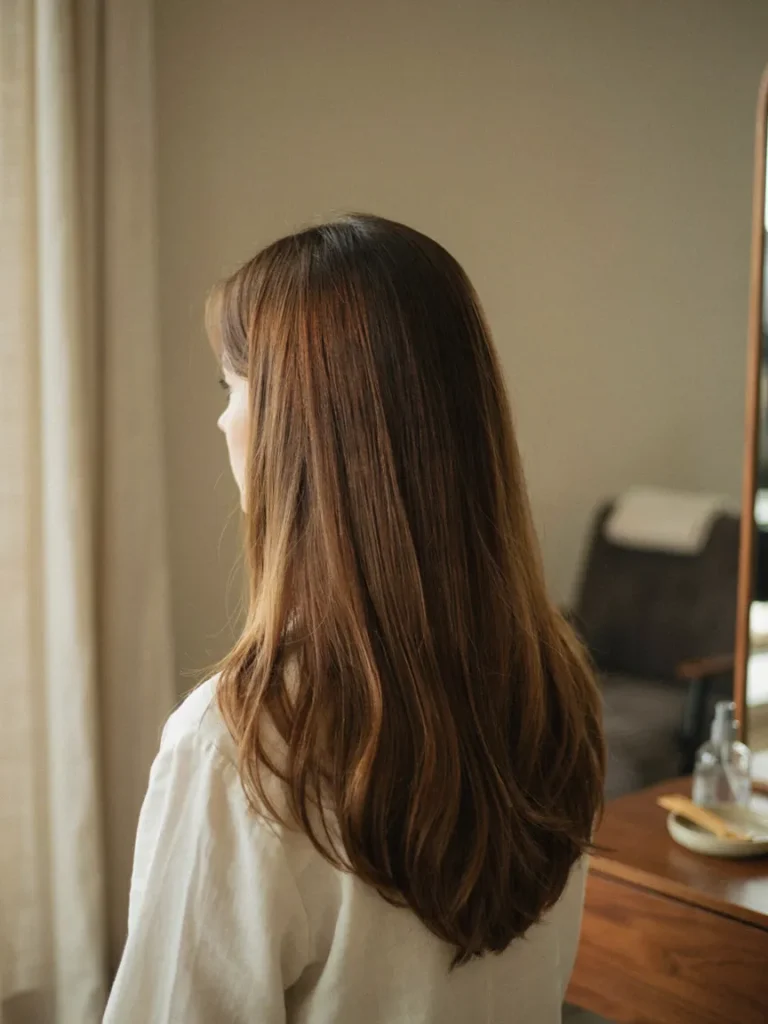
14. Long V-Cut Layers
Option A: V-Cut Layers
| Feature | Result |
| Back shape | Gradual V-shaped outline |
| Hair movement | Flowing, tapered ends |
| Styling | Works with straight hair or waves |
| Best suited to | Medium to thick hair with sufficient length |
Option B: Blunt Long Cut
| Feature | Result |
| Back shape | Straight, even perimeter |
| Hair movement | Heavier, more uniform finish |
| Styling | Sleek and polished |
| Best suited to | Anyone who prefers a fuller-looking outline |
Long V-cut layers create a tapered shape that encourages the eye to travel downward through the hair. The front sections can frame the jaw without removing too much length from the back. Ask for a moderate V rather than an extreme point, particularly if your ends are fine. Soft waves can emphasize the layered shape while keeping the overall finish natural.
15. Textured French Bob

DO:
- Ask for a lightly textured bob with movement through the ends.
- Consider a longer, side-swept fringe if you prefer diagonal face framing.
- Keep some softness around the jaw instead of creating a rigid outline.
- Discuss your natural hair texture before choosing the final length.
DON’T:
- Request a very rounded silhouette if you want less width around the cheeks.
- Choose dense, blunt bangs without considering your forehead and hair density.
- Remove too much weight from already fine hair.
- Assume the same bob length will suit every round face.
The French bob offers a shorter, fashion-forward alternative to longer layered cuts. Its appeal comes from the combination of a defined outline and relaxed texture. For a more lengthening effect, consider a version that falls below the cheekbones, with a soft fringe and lightly separated ends. This keeps the cut distinctive while allowing your natural features to remain the focus.
16. Voluminous Crown Layers

Best For: Fine to medium hair that needs extra lift at the roots.
Styling Time: Around 10 minutes with a round brush and blow dryer.
Technique: Lift small sections at the crown while drying, directing the roots upward.
Result: Added height, airy movement, and a more elongated-looking silhouette.
Crown volume shifts visual attention upward rather than concentrating fullness around the cheeks. Ask your stylist for blended layers that support lift without making the sides too bulky. For everyday styling, use a lightweight volumizing product at the roots and dry the top sections in the opposite direction before placing them into your preferred part.
17. Sleek Long Straight Cut

Long, straight hair creates a clean vertical frame that can make rounded facial features appear more elongated. The key is keeping the silhouette smooth without removing too much fullness from the ends.
Ask for long, subtle face-framing pieces that begin below the cheekbones. A center part creates symmetry, while a slightly off-center part adds gentle asymmetry. Use a heat protectant before straightening, and avoid excessive heat to maintain shine and reduce breakage. This style is particularly appealing for anyone who prefers a minimal haircut with little layering and a polished everyday finish.
18. Layered Cut With Side Fringe

Quick Tip:
Ask for a side fringe that blends gradually into the cheek-length layers. Keep the shortest section light enough to sweep across the forehead without forming a thick horizontal line.
A side fringe adds direction to the haircut and draws attention toward the eyes. Combined with shoulder-length layers, it creates movement around the face without sacrificing much length. For a softer finish, blow-dry the fringe diagonally with a small round brush, then allow the longer layers to fall naturally. This combination suits straight and wavy hair, although very curly textures may need a customized cutting approach.
19. Shoulder-Length Butterfly Layers

BEFORE
A shoulder-length haircut without layers can appear heavy around the sides, especially when the ends curve inward near the cheeks. The shape may lack movement and definition.
AFTER
Shorter, blended front layers create a feathered frame, while longer sections maintain fullness near the shoulders. Gentle outward styling adds lift and movement around the face.
Ask your stylist to customize the shortest layers according to your hair density and face proportions. Use a round brush to lift the roots and sweep the front pieces away from your cheeks. This variation of the butterfly cut offers noticeable texture without requiring very long hair, making it practical for anyone who prefers a medium-length style.
20. Tapered Pixie With Fringe
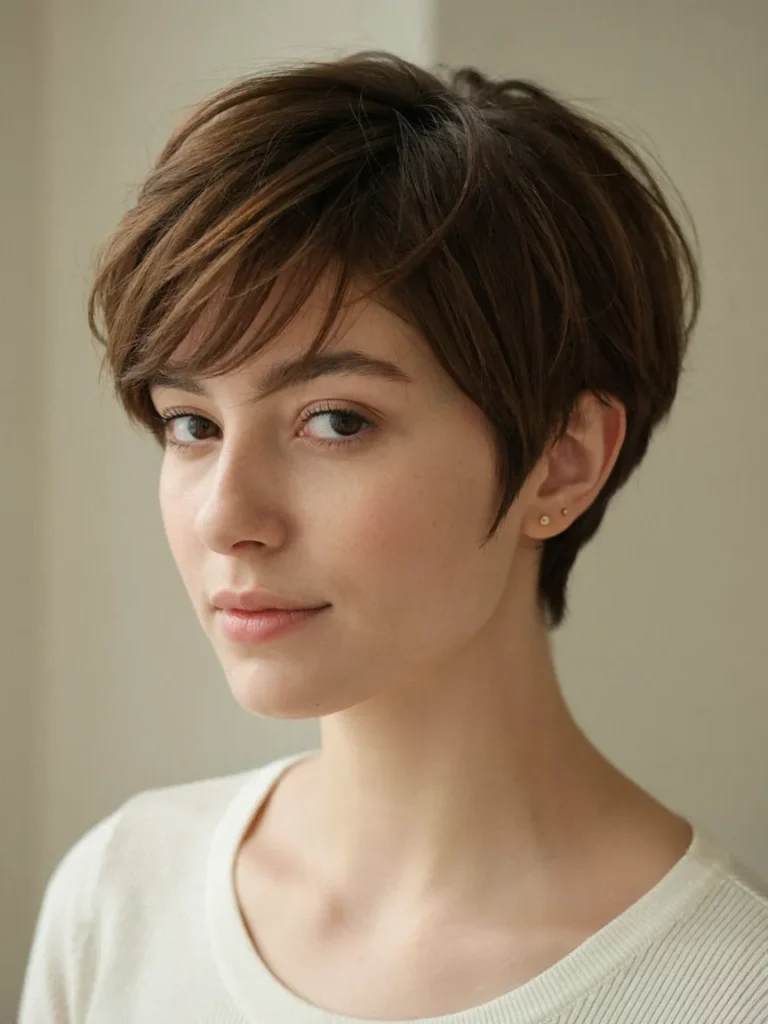
- Keep the fringe longer. Ask for a sweeping front section that adds a diagonal line across the forehead.
- Taper the sides gently. A close but not overly severe finish keeps the haircut soft around the temples.
- Add crown texture. Short layers create lift and help the style retain its shape.
- Finish with light styling paste. Separate a few strands with your fingertips for natural definition.
A tapered pixie is a low-length option that emphasizes the eyes, brows, and cheekbones. The longer fringe adds versatility, allowing you to wear it swept sideways or loosely forward. Discuss maintenance before committing, because short sides and textured layers usually need regular trims to preserve their shape. The best version is one that complements your natural hairline and daily styling habits.
21. Long Layers With Money Pieces
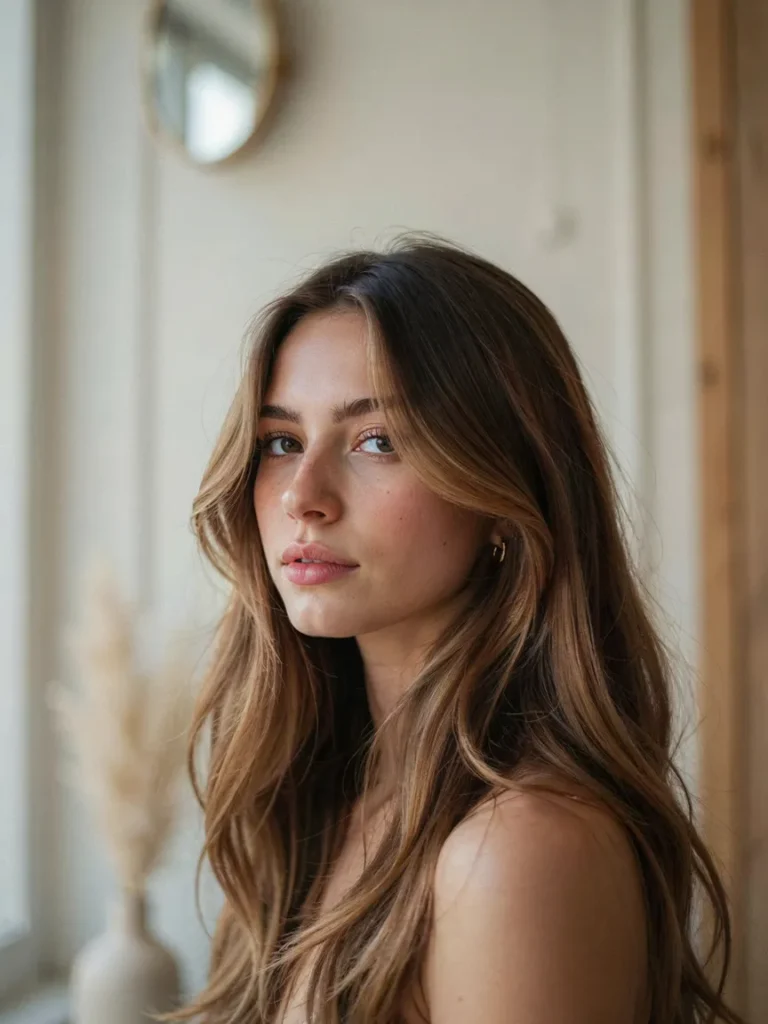
| Feature | Option A: Subtle Highlights | Option B: Bold Highlights |
| Color contrast | Soft caramel or honey | Brighter blonde or golden tones |
| Overall effect | Natural, understated dimension | Noticeable contrast around the face |
| Maintenance | Often easier to blend as roots grow | May need more frequent color upkeep |
| Best approach | Gradual brightness near the front | Carefully placed sections customized to the base color |
Long layers with money-piece highlights combine a flattering haircut with strategically placed color. The brighter front sections draw attention toward the eyes and cheekbones, while the layers create movement through the lengths. Ask your colorist to select a shade that complements your natural hair color and skin tone. Keep the highlights blended rather than overly thick for a softer, more natural finish.
22. Soft U-Shaped Layers

DO:
- Ask for a gentle U-shaped perimeter that preserves fullness at the ends.
- Add long face-framing layers beginning below the cheekbones.
- Keep the front sections blended into the rest of the haircut.
- Use a round brush to create soft movement around the shoulders.
DON’T:
- Choose excessive layers if your ends are already thin.
- Cut the front pieces too short without discussing your preferred styling routine.
- Add too much width around the cheeks with bulky curls.
- Expect the haircut alone to change your natural facial structure.
The U-shaped cut is a lovely choice for anyone who wants to maintain long hair while adding shape and movement. Its softly curved outline looks natural from the back, while subtle front layers frame the face without removing too much length. Among the many haircuts for round faces, this option stands out for its versatility, especially if you prefer timeless styling over dramatic changes.
Conclusion
Finding a flattering hairstyle should feel exciting, not overwhelming. From textured lobs and butterfly layers to sleek bobs and soft curtain bangs, these 22 haircuts for round faces offer plenty of inspiration for your next look.
Remember, the best haircut is one that makes you feel comfortable and confident while complementing your natural features. Before visiting your stylist, save a few favorite photos and discuss your hair texture, preferred length, and styling routine.
Save this article on Pinterest so your favorite ideas are always within reach. Try a new style when you’re ready, and share this guide with someone searching for fresh hairstyle inspiration. Your next favorite look might be just one haircut away!